
Patios and Walkways in Little Rock
Concrete Patios in Little Rock
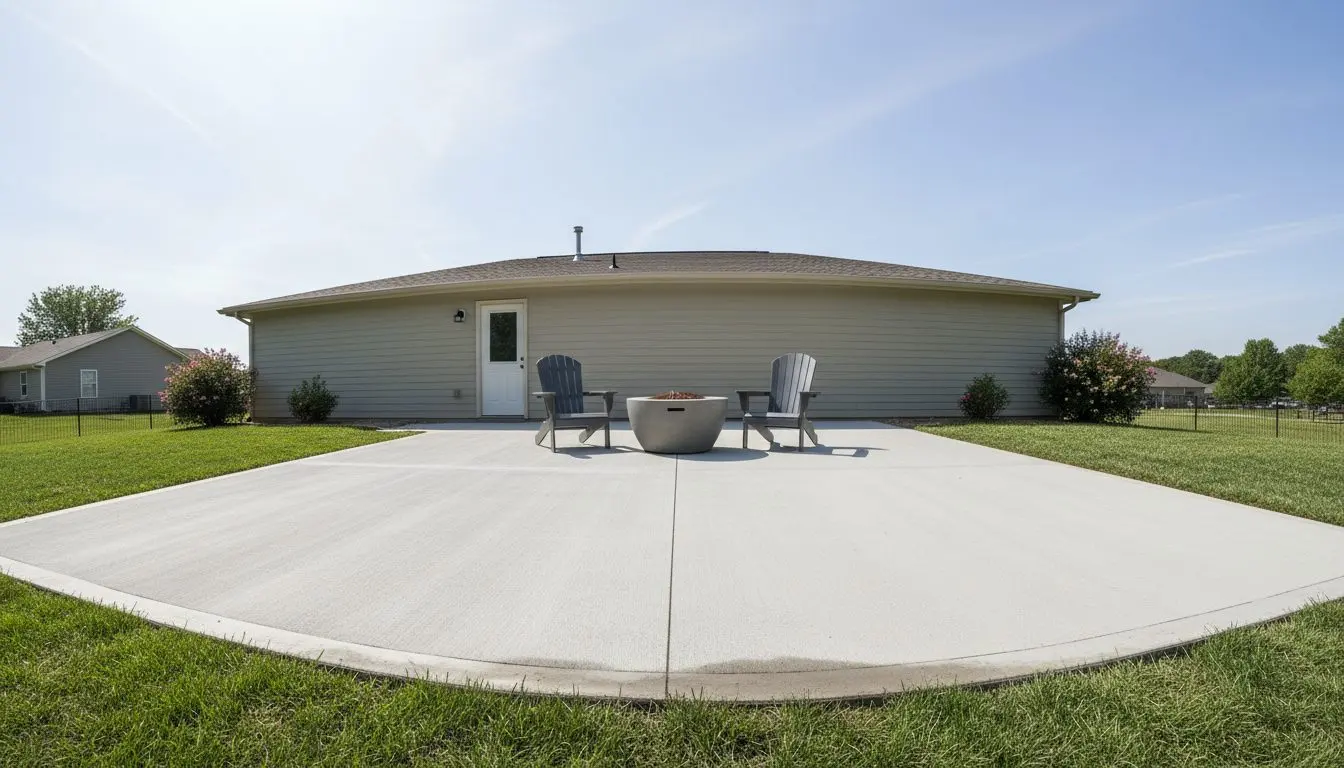
Poured level and pitched away from the house, finished broom, stamped or exposed aggregate, and ready to walk on within days.
A patio built to drain, not just to look finished
You end up with an outdoor room, poured level and pitched away from the house so it does not pool under a table after a storm.
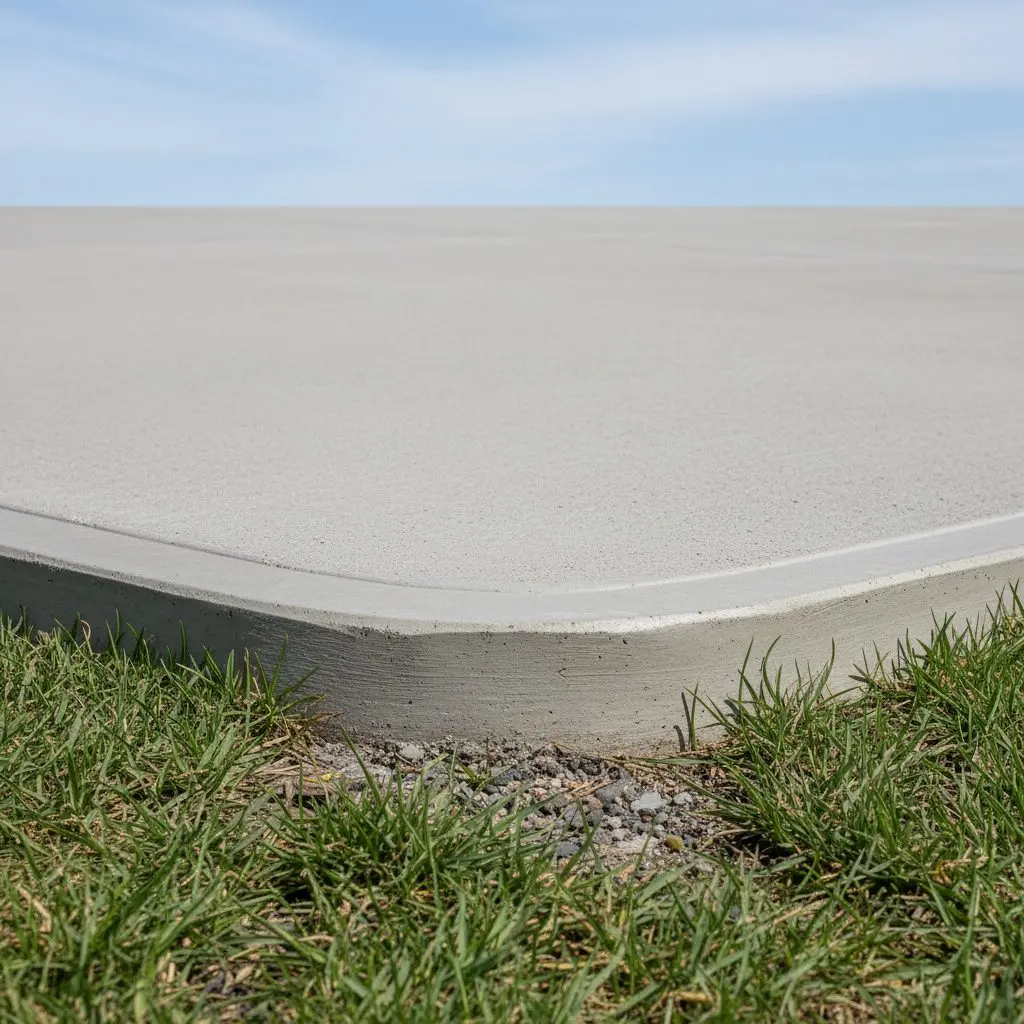
This group covers new patios poured off the back of the house, poured walkways connecting a patio to a driveway or a gate, front entry walkways, and side paths between the house and a fence line.
It does not cover the driveway itself or a parking pad built to carry a vehicle. Those are poured to a different thickness and reinforcement, and belong on the driveways and parking page instead.
Over two hundred patios and walkways poured across Little Rock and the surrounding towns since 2011, from a plain slab off a back door to a stamped patio built around a fire pit.
A rectangular patio off the back door is the most common job, followed by a walkway connecting it to the driveway or a side gate, then a covered pad sized for a future pergola, and a front entry walkway replacing a cracked or sunken original.
Every patio is poured with a fall of about an eighth of an inch per foot away from the house, the slope that carries rainwater off the slab instead of back toward the foundation, which a plain flat pour does not give you by accident.
A family who wants somewhere to put a table and chairs that does not turn to mud after a storm, and somebody replacing a patio that has pooled water against the back door for years.
Call (501) 555-0168 for a free estimate on your patio. You will go from a yard that floods against the back door to an outdoor room you can actually use after a storm!
What's included in a new patio pour
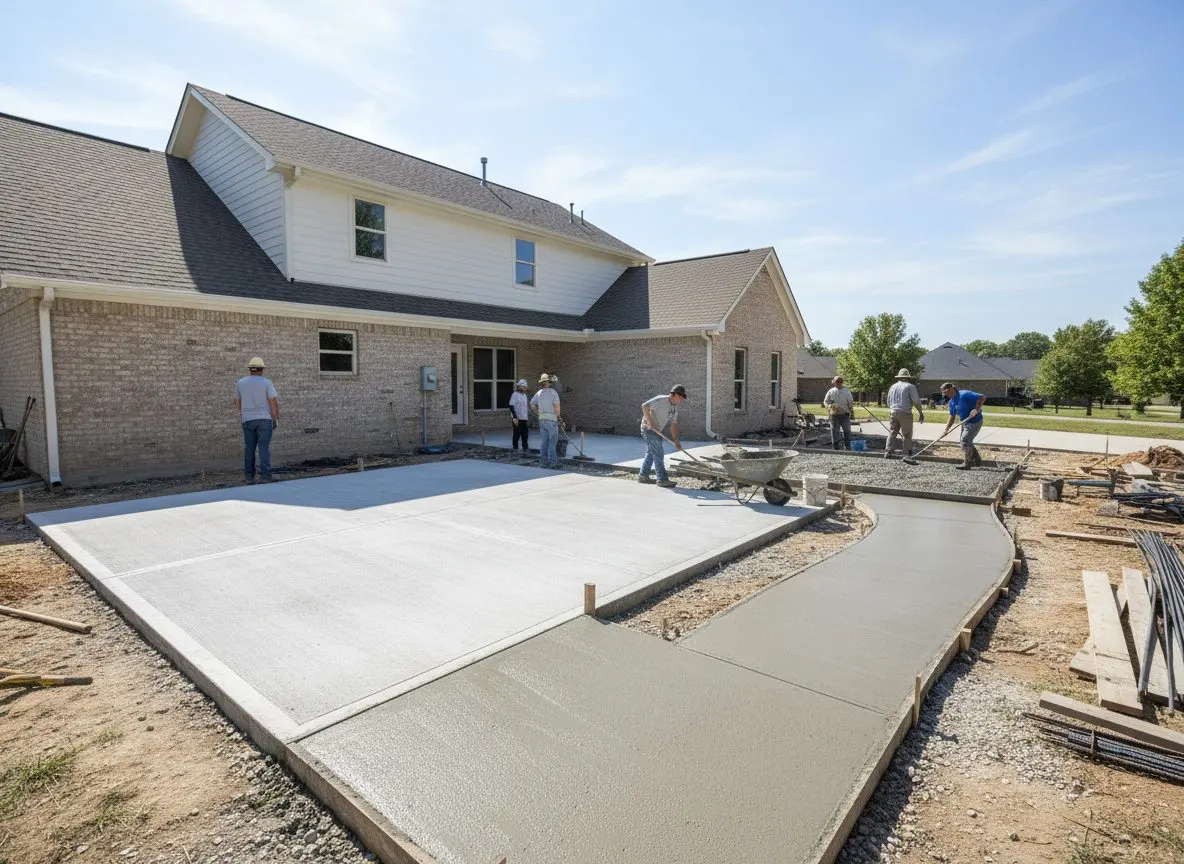
One crew handles the tear-out, the base and the pour, so a patio and any connecting walkway match from the same visit.
- New patios poured off the back door
- Poured walkways connecting a patio to the driveway
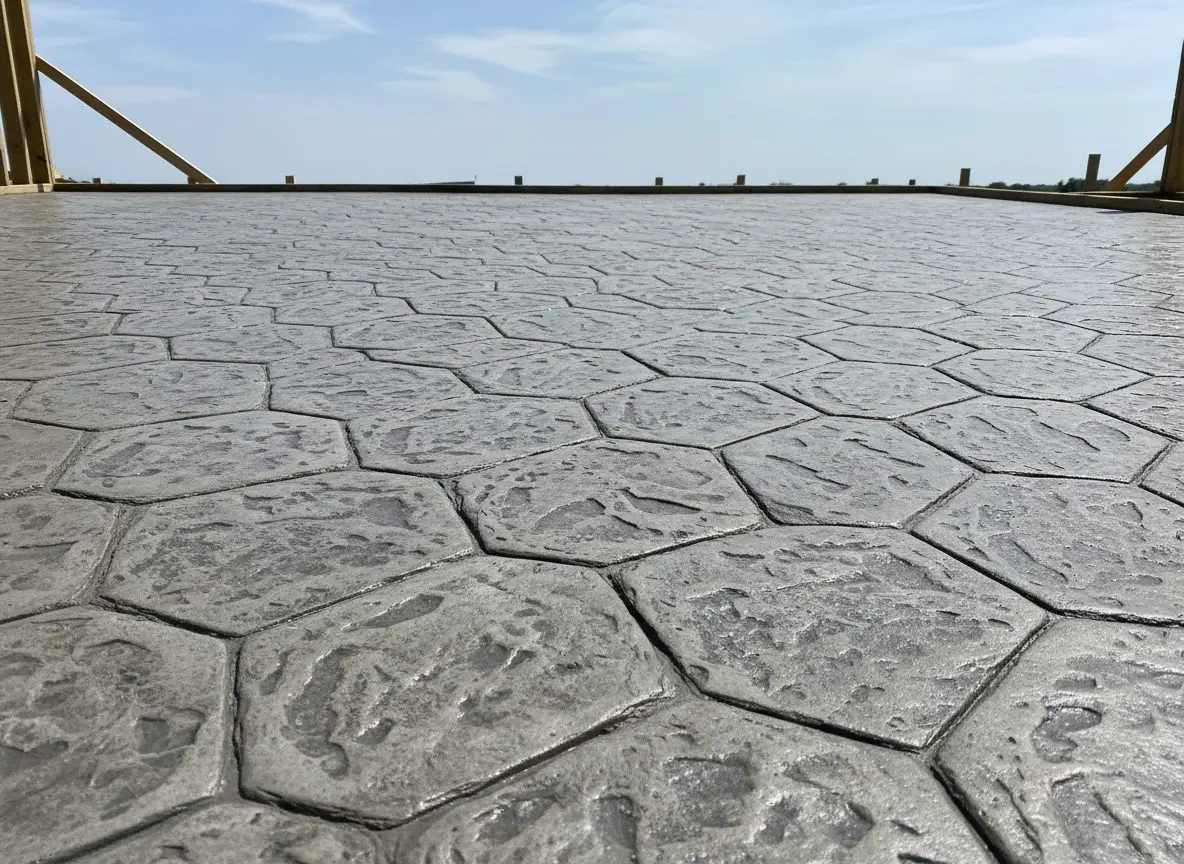
- Stamped and broom-finished patio surfaces
- Covered patio slabs for a future pergola
- Front entry walkways and porch pads
- Side yard paths to a gate or shed
- Patio extensions off an existing slab
Pitch alone or a drain as well, which one your yard needs
Most yards need nothing more than the slab pitched away from the house.
The fall alone is enough wherever the ground already runs away from the house and the patio will sit above the lawn around it, and where the grass is dry within an hour of a storm. That covers most yards, and it costs nothing extra.
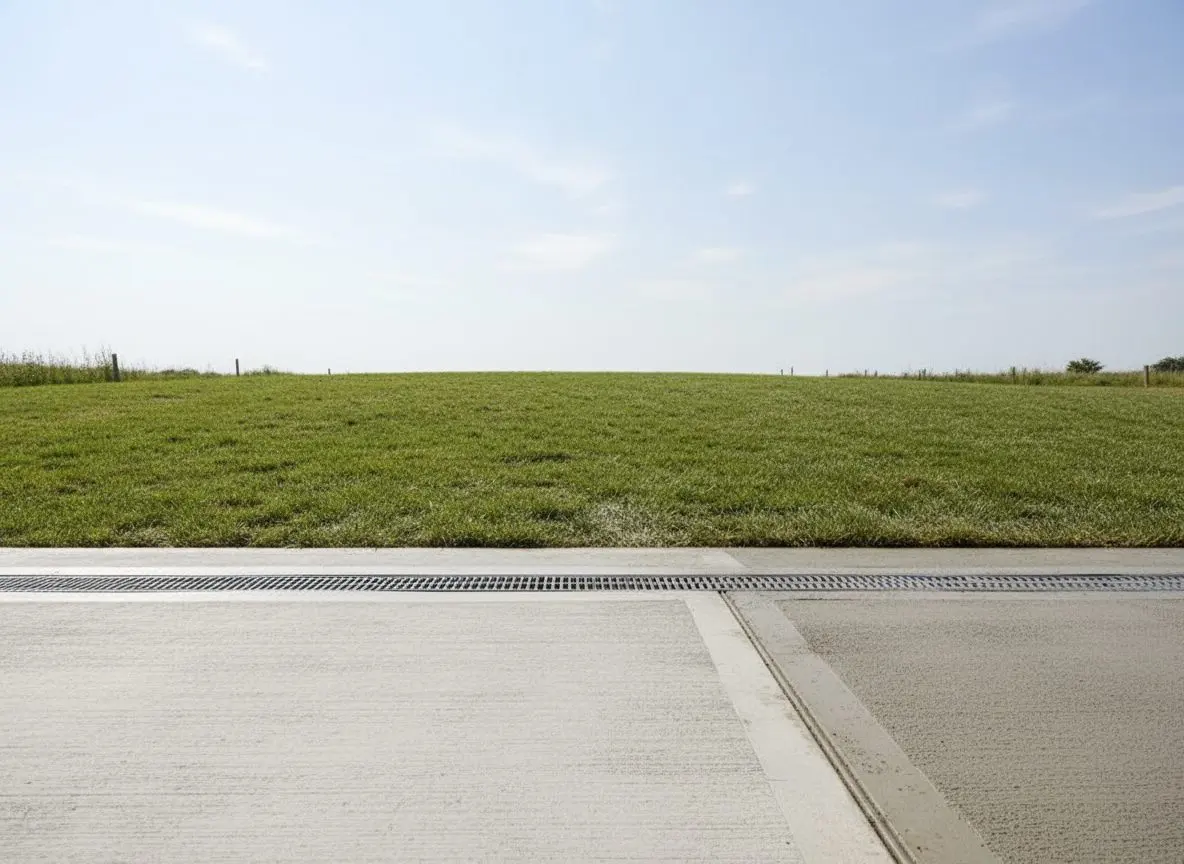
A drain tied into the edge of the slab is what a low or boxed-in yard needs, where a fence or a rise sends the water back and the pitch has nowhere to send it. Skip it there and the patio drains exactly as designed, into the ground against the foundation.
Little Rock Concrete Elite works out which one your yard needs by watching where the water goes now rather than after the concrete is down, and says so plainly when the fall alone will do the job and a drain would only add cost.
What goes into a patio built to drain
A lighter mix, a compacted base and a measured fall away from the house, set before the forms go in.
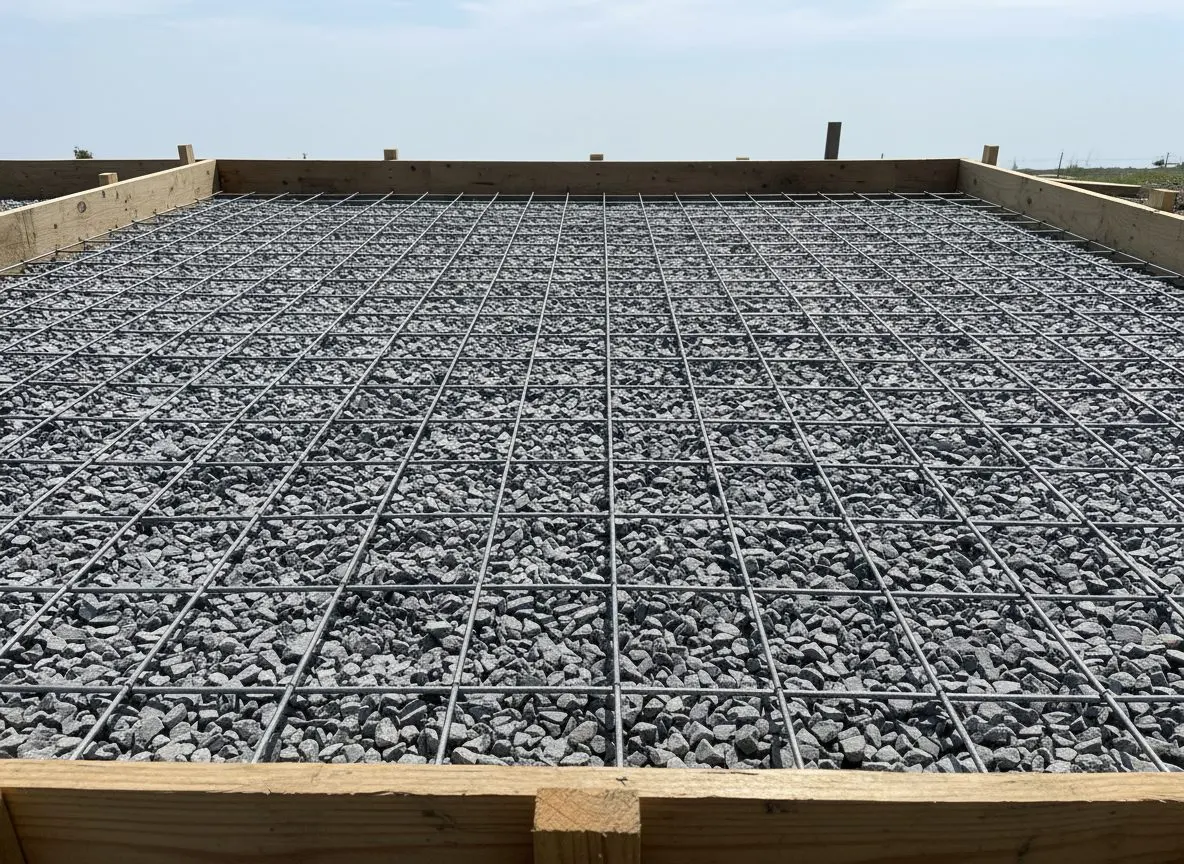
A patio is poured at a minimum of 3,000 PSI, the mix strength standard for foot traffic and furniture rather than a vehicle. That is lighter than a driveway needs, but the base compaction does not change, since that is what keeps the surface flat on Little Rock clay.
The base runs a minimum of four inches of compacted crushed stone, the same depth as a driveway even though the load on top is lighter. Reinforcement is welded wire mesh rather than the fiber or steel a driveway carries.
Every slab is poured with a fall of about an eighth of an inch per foot away from the house. Control joints are saw cut within 24 hours, laid out to match the patio's own shape rather than a fixed spacing.
- 3,000 PSI mix, standard for foot traffic
- Four-inch compacted crushed stone base
- Welded wire mesh reinforcement, not steel bar
- Control joints cut within 24 hours
- Eighth-inch-per-foot fall away from the house
- Broom, stamped or exposed aggregate finish
Call for a free estimate and get the mix, the base depth and the drainage fall in writing before you decide anything.
(501) 555-0168Why does one patio cost more than another the same size?
A patio prices differently depending on how it drains, what finish you choose and what is already on the ground. The list below is what actually moves the number.
- Access to the yard
- A patio reached through a wide gate or side yard a wheelbarrow can cross costs less than one behind a locked gate, where concrete has to be barrowed in by hand load by load.
- Old surface removal
- A new pour over prepared ground costs less than one that starts with breaking out an old patio slab or a paver bed and hauling the debris away first.
- Base and drainage prep
- Little Rock clay swells and shrinks with the season, so a base that holds a patio flat and pitched away from the house needs more grading and compaction than a site on stable ground.
- Size and shape
- A plain rectangle costs least. A curved edge, a step-down level or a fire pit cutout all add formwork and labor a simple slab the same area does not need.
- Finish
- A broom finish is the fastest and least expensive surface to lay. Stamped, stained or exposed aggregate work takes longer and needs a more skilled crew to keep the pattern consistent.
- Covered or open
- A patio poured flat and open costs less than one built to carry the thickened edge or footings a future pergola or roof will need later, since that work is easier to do at the pour than to cut in afterwards.
Most of this is only clear once somebody has walked the yard and seen the access, the slope and what the old surface is doing, which is what the free estimate is for. Get a free quote
From your call to a cured slab
Most driveways and patios run five to ten days from the first call to a slab you can park or walk on.
Call Little Rock Concrete Elite for a free estimate, or ask for a callback the same day.
Get a free quoteWhat a new patio is worth when you sell
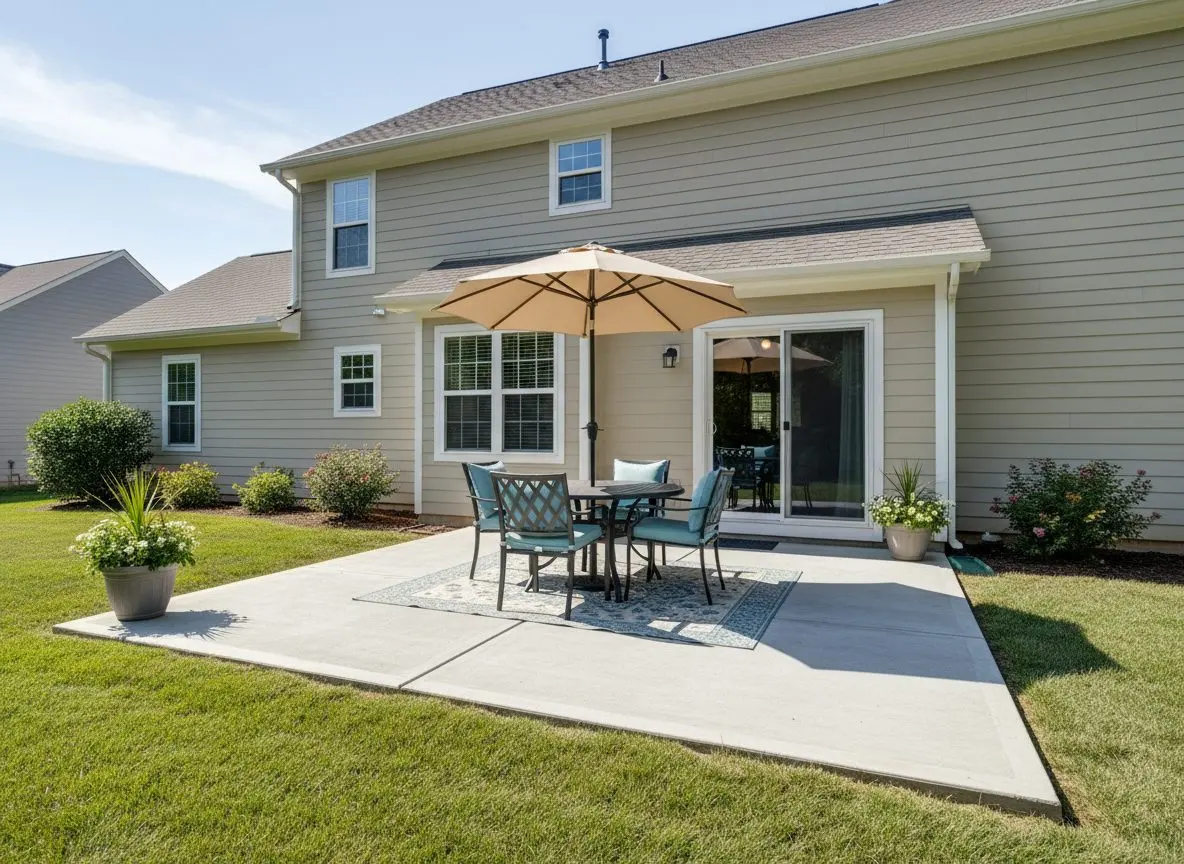
A patio does not add a number to a listing, it adds a room a buyer can picture using.
No published resale report prices a concrete patio as its own line item. The national studies track whole outdoor living projects, a deck addition or a backyard remodel, not one poured slab, so there is no percentage to quote for Little Rock or anywhere else.
What agents in this market tend to agree on instead is that a patio reads as usable square footage in a way a bare yard does not. A level, well-drained patio staged with furniture reads as an extra room during a showing, a cracked patio holding standing water reads as a project the buyer has to solve first.
The value here is less about a figure a report can attach and more about whether the space works the day somebody walks through it.
What Little Rock clay does under a patio
Clay that swells and shrinks, a pour season that runs long and hot, and storms that test the fall away from the house all change how a patio holds up here.
- Clay pulling at a slab against the house
- Little Rock clay swells in a wet spring and pulls back hard in August, and a patio sits closer to the foundation than almost anything else poured on a property. A properly compacted base keeps the slab from pulling away from the house as the clay moves.
- A pour season that runs hot
- Stamped and exposed aggregate finishes take longer to lay than a plain broom surface, and summer heat pushes concrete toward setting before a crew can finish texturing it. Timing the pour for the cooler part of the day keeps the pattern crisp.
- Storms that test the fall away from the house
- Central Arkansas gets heavy, sudden downpours in spring and summer, and a patio poured slightly flat instead of pitched sends water toward the door, not across the yard, the difference between sitting outside next morning and dodging puddles.
Patios and walkways finished around Little Rock
Recent patios and walkways poured across Little Rock and the surrounding towns, each one pitched to drain for the yard it sits in.
-
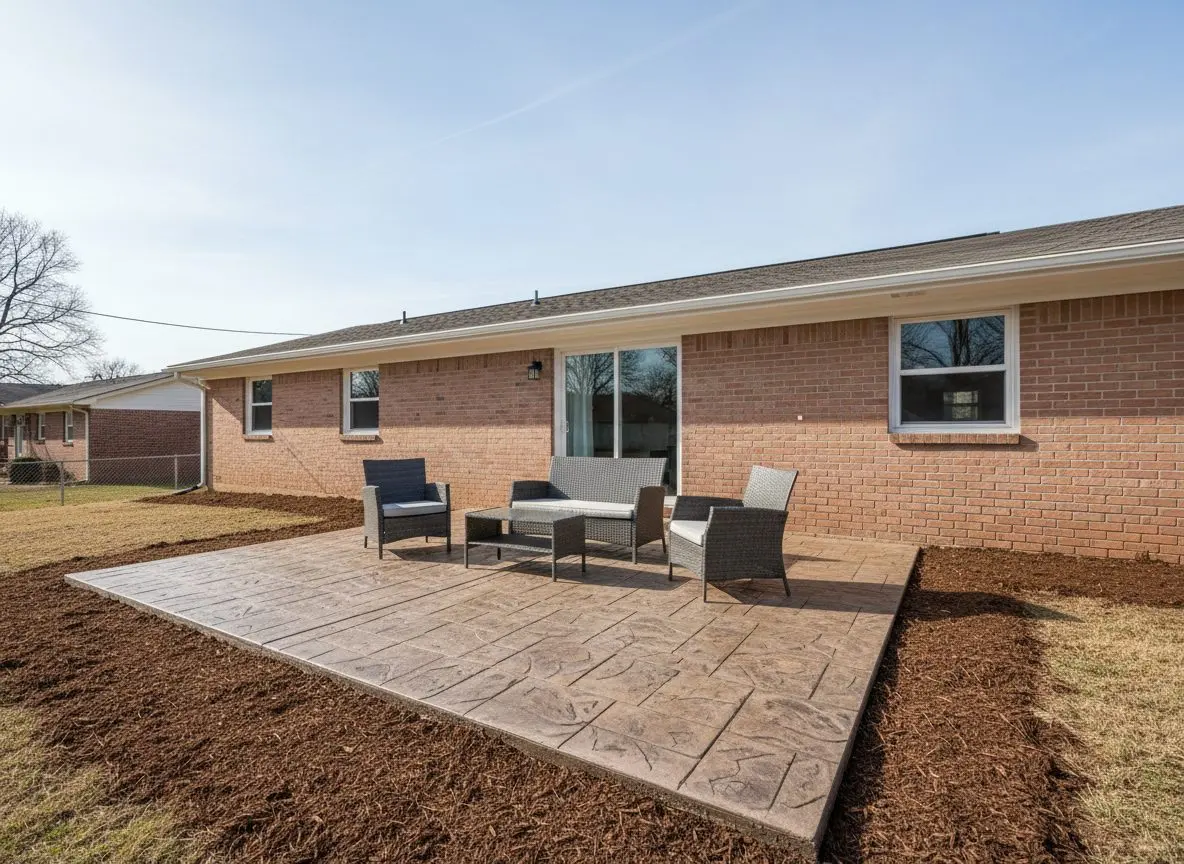
Stamped patio off a new addition
Jacksonville
A stamped patio was poured off a new kitchen addition, matched in color to the home's brick and pitched away from the new foundation.
-
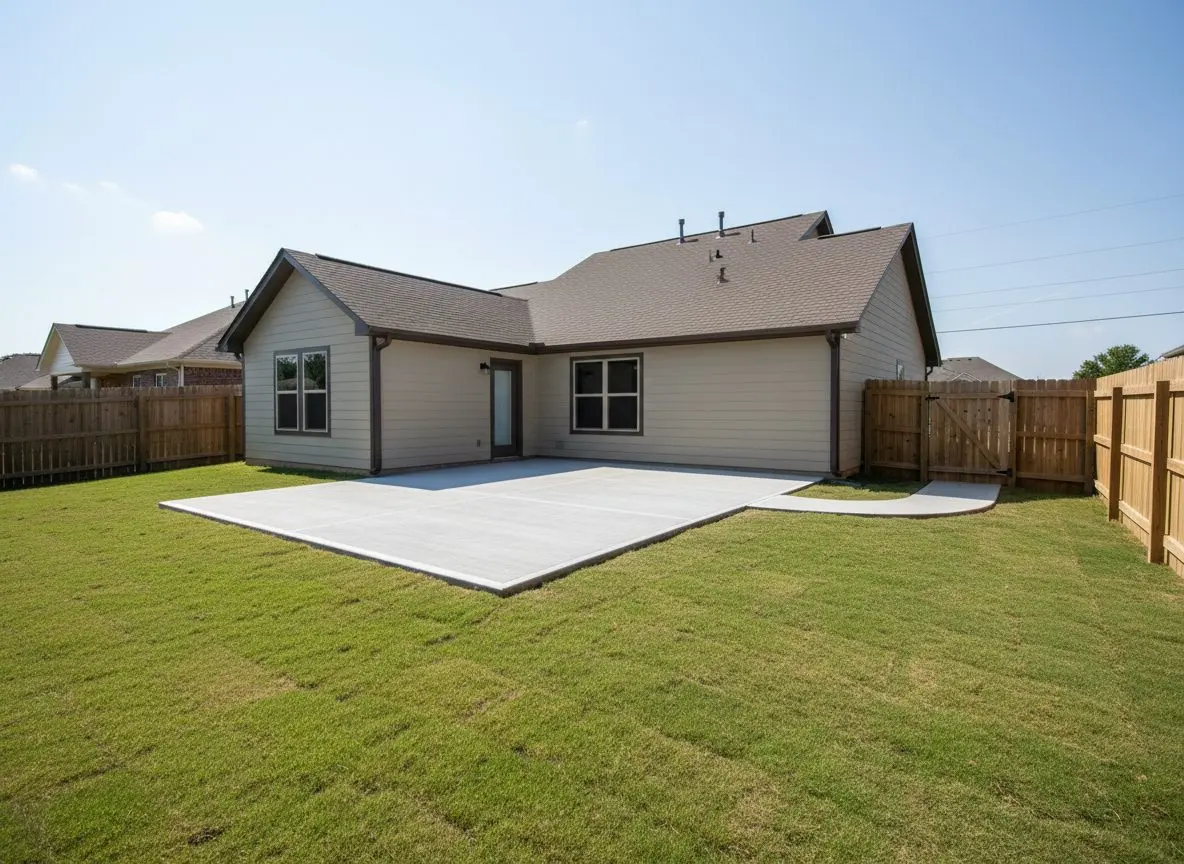
Broom-finished patio and walkway
Little Rock
A plain broom-finished patio went in behind the house with a connecting walkway to the driveway, replacing a dirt path worn into mud.
-
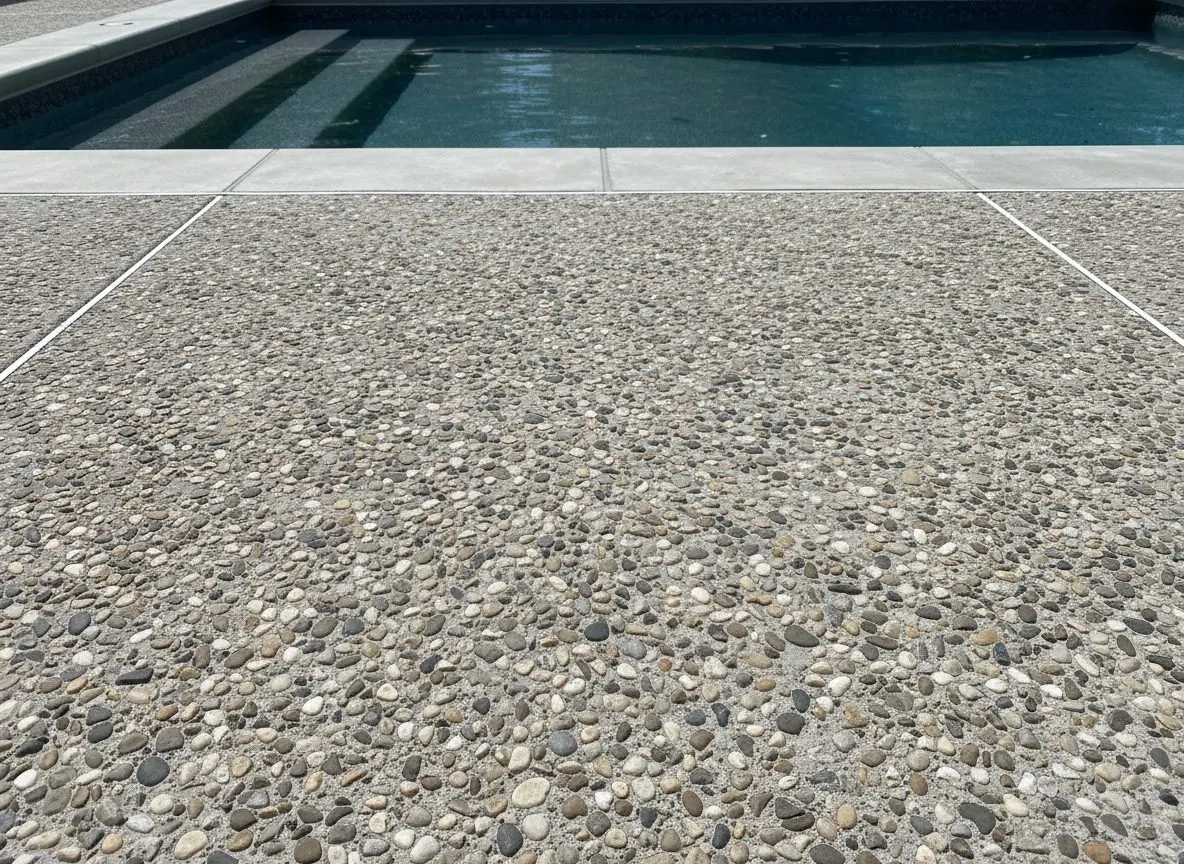
Exposed aggregate pool patio
Conway
An exposed aggregate patio was poured around a pool for its non-slip texture, graded to carry splashed water away from the coping.
-
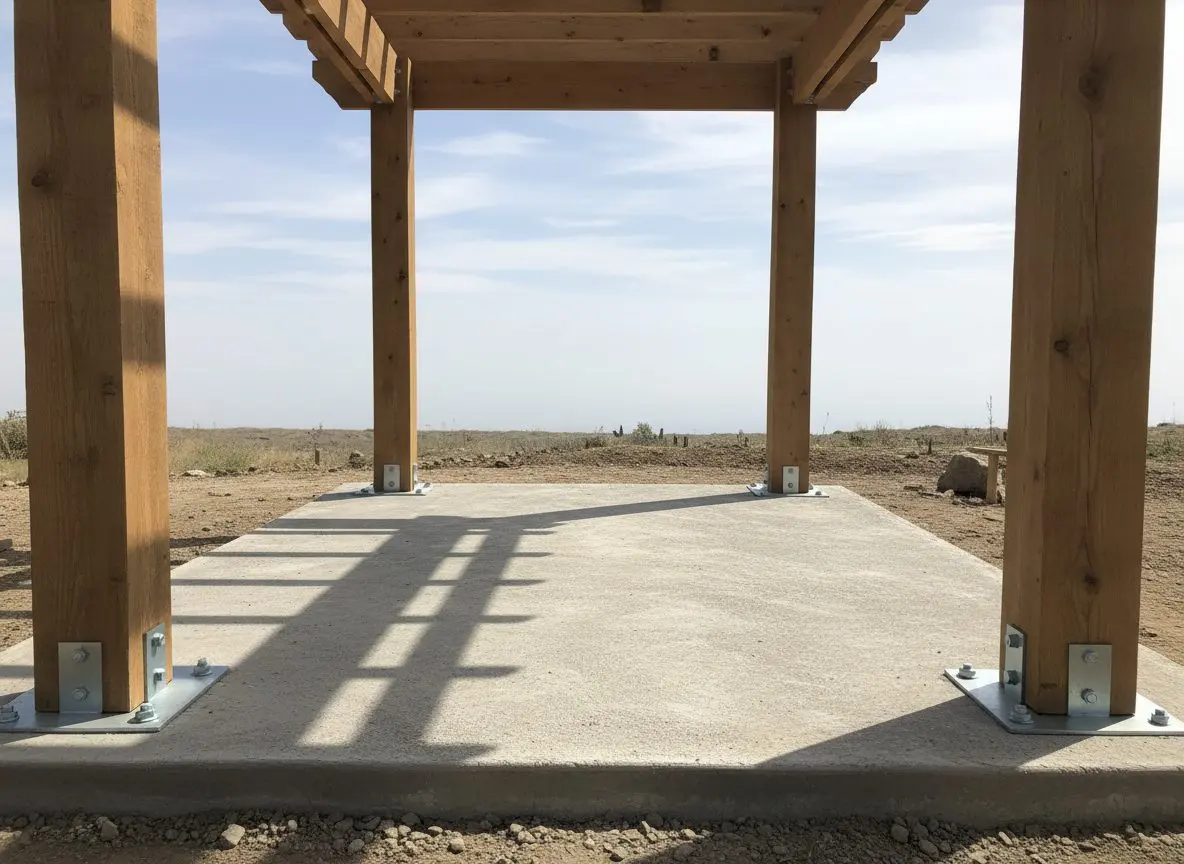
Covered patio pad for a pergola
Benton
A patio was poured with a thickened edge and footings sized for a pergola the homeowner planned to add the following spring.
-
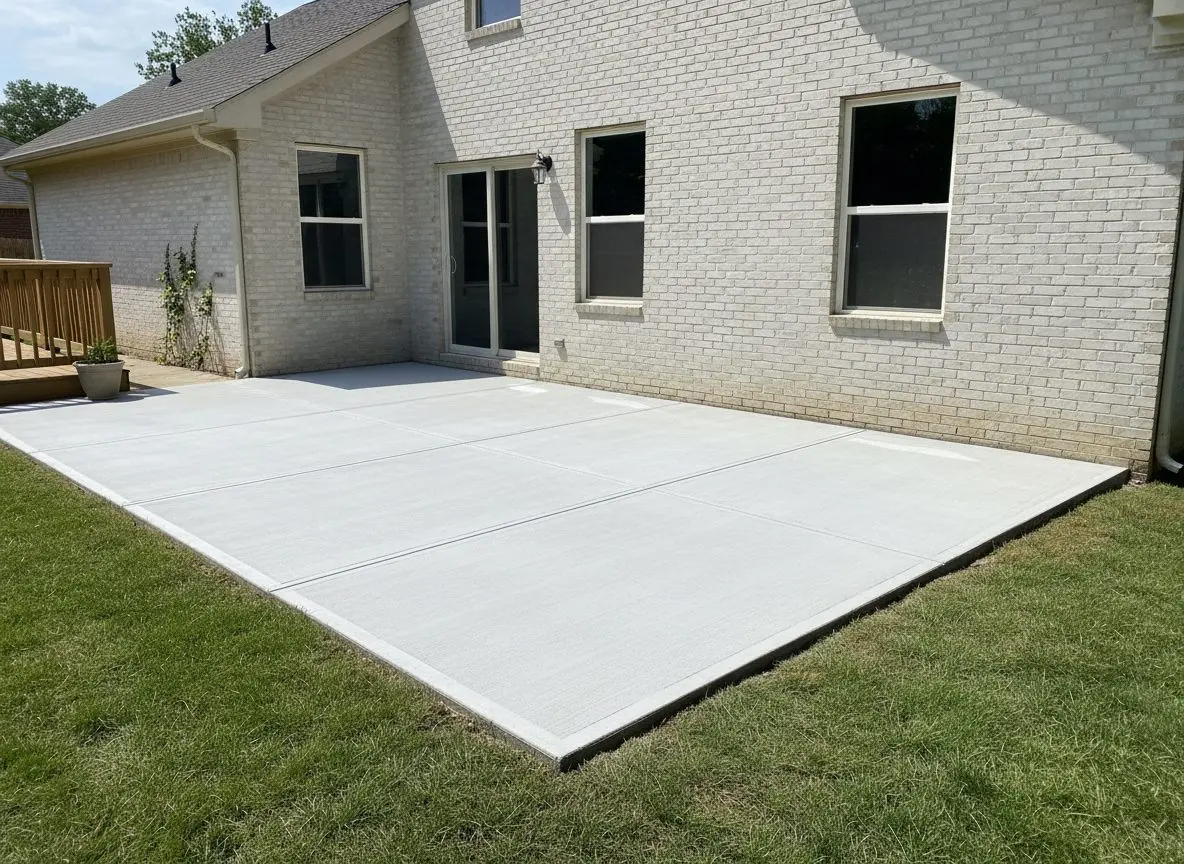
Patio replacing a cracked slab
Sherwood
An old, flat-poured patio that pooled water at the back door was broken out and repoured with a proper fall away from the house.
-
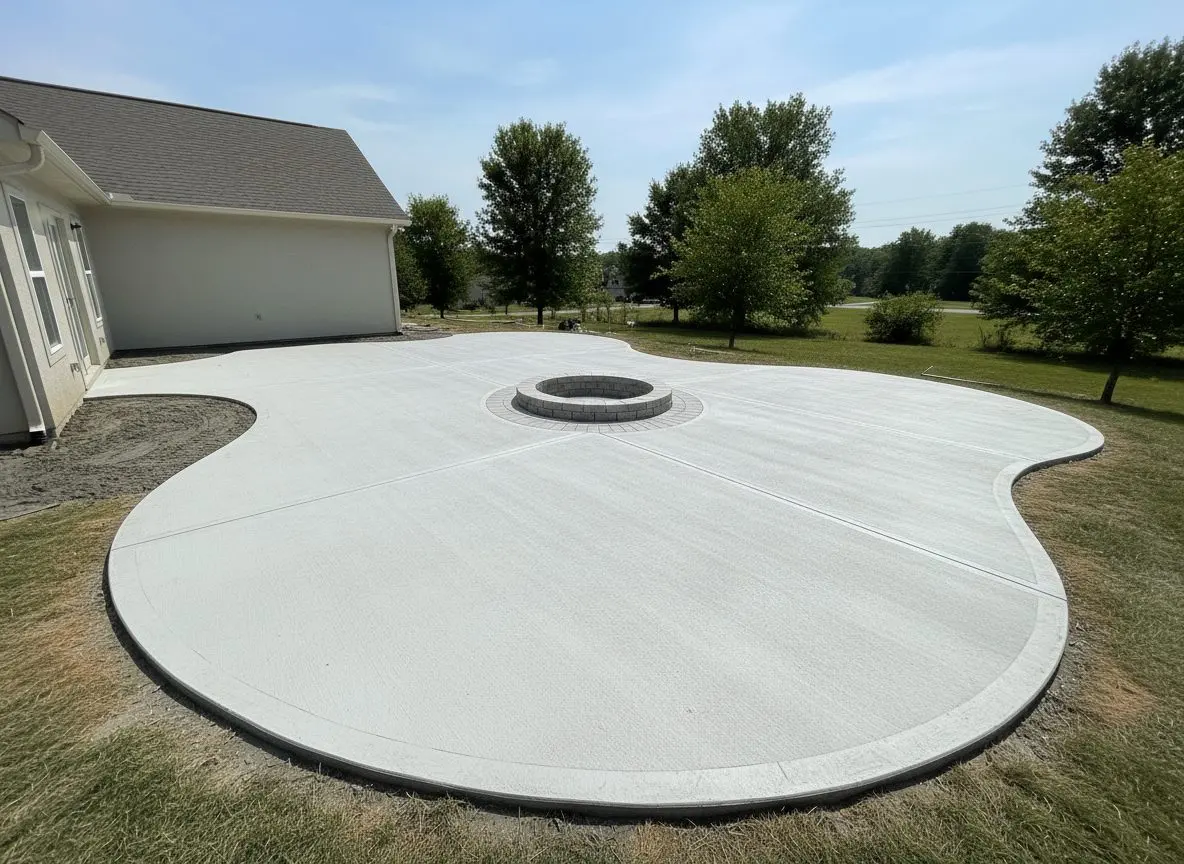
Curved patio with a fire pit cutout
North Little Rock
A curved-edge patio was poured around a built-in fire pit cutout, formed by hand rather than to the usual straight lines.
What customers said after a new patio
-
Rated 5 out of 5
Patio and a path round to the side gate. They set the fall away from the house without me asking, which the last lot did not, and the water no longer stands by the back door.
Marilyn D. Bryant Patio and walkway -
Rated 5 out of 5
We changed our minds on the shape twice before they poured and neither time got a sigh out of them. The forms went in a third time. It follows the flower bed now instead of cutting across it.
Gerald P. Sherwood Patio -
Rated 5 out of 5
Walkway from the drive up to the porch, done inside a day. They swept up and took the old broken slabs away with them. Small job, and plenty of people would not have turned up for it at all.
Nadine H. Jacksonville Walkway
Tell us what the concrete is doing and someone will come out and look at it before you commit to anything.
Get a free quoteFAQs
Frequently asked questions
Patio questions people ask before they call
Can a patio be poured right up against the house?
Yes, and most are. The slab is poured slightly below the door threshold and pitched away from the foundation from the first inch, which is what keeps water moving away from the house instead of pooling at the wall where the patio meets it.
Does a new patio include the walkway to the driveway?
It can, and it is worth deciding before the quote is written. A connecting walkway is usually poured in the same visit as the patio, tied in with its own joint, so pricing it as an afterthought later means a second mobilization for the crew.
How long before furniture can go on a new patio?
Light furniture can usually go back within a couple of days once the surface has set enough to walk on. A grill, a heavy planter or anything with narrow feet that concentrates weight is better held off closer to a week while the slab keeps curing.
Should I patch a cracked patio or repour it?
A hairline crack sitting inside a control joint is normal and does not need a repour. A crack running across the slab away from a joint, or a section that has settled or tilted back toward the house, usually means the base has failed and patching only hides it for a season.
Why does a stamped patio cost more than a broom finish?
Stamping presses a pattern into the surface before it cures, which takes longer per square foot and needs a crew experienced enough to keep the pattern consistent across the whole slab. A broom finish is dragged once and needs none of that extra time.
Will the yard be unusable while a patio is poured?
The area being poured is closed off while it cures, usually for a few days, but the rest of the yard stays open. Access for the crew and the concrete truck is worked out with you before the pour, especially where a gate or a narrow side yard is involved.
How does exposed aggregate compare to a stamped finish?
Stamped concrete has a pattern pressed into the surface before it cures, made to read as stone, brick or tile. Exposed aggregate is washed after pouring so the stone inside the mix shows through the surface, giving a textured, non-slip finish rather than a printed pattern.
Can concrete reach a patio behind a locked side gate?
Yes, though it usually means the concrete is barrowed in by hand rather than poured straight from the truck, which adds crew time to the job. Knowing the access ahead of the estimate is part of why the quote can vary from a patio a truck can reach directly.
Why does water pool on part of my patio?
A patio that pools water usually was not pitched enough away from the house when it was poured, or the ground underneath has settled unevenly since. Either way it is worth a look, since standing water against a foundation is the kind of thing that gets worse rather than better on its own.
Can a patio be poured under a pergola or covered porch?
Yes, and if the structure is planned rather than already built, saying so before the pour lets the slab go in with a thickened edge or footings sized for it, rather than cutting into a finished patio later to add them once it has already cured.
Does a patio need rebar the way a driveway does?
No. A patio only carries foot traffic and furniture, so welded wire mesh is the standard reinforcement rather than the steel rebar a driveway needs to carry a vehicle. Asking for rebar on a patio adds cost without adding anything the slab actually needs.
Does a new patio need to be sealed?
A plain broom-finished patio does not strictly need it, though sealing once the concrete has cured helps keep water out of the surface. A stamped or exposed aggregate patio benefits more, since sealing is what keeps the color and texture from fading under an Arkansas summer.
Little Rock Concrete Elite
Pouring concrete across central Arkansas since 2011.
Little Rock Concrete Elite pours driveways, patios, foundations, garage slabs and steps across Little Rock and the surrounding towns of central Arkansas, along with repair, resurfacing and decorative finishes like stamped and stained concrete for slabs already showing their age.
Why call Little Rock Concrete Elite for the pour?
- Pouring driveways, patios, foundations and repairs since 2011
- A written quote naming the mix, thickness and joints, not a guess
- Same day callback on every call
- General liability and workers compensation cover on every job
- Crews who build for Arkansas clay and heat, not against them
Central Arkansas's clay soil moves every slab poured on it, and the difference between a driveway that lasts and one that cracks at the joints within a year is what goes in before the truck ever arrives. Little Rock Concrete Elite has been getting that part right in Little Rock since 2011. Call (501) 555-0168 for a free estimate, or ask for a same day callback.
Give us a call
office@littlerockconcreteelite.com
Send us a message
400 W Capitol Ave, Ste 1700, Little Rock, AR, 72201
Where to find us