
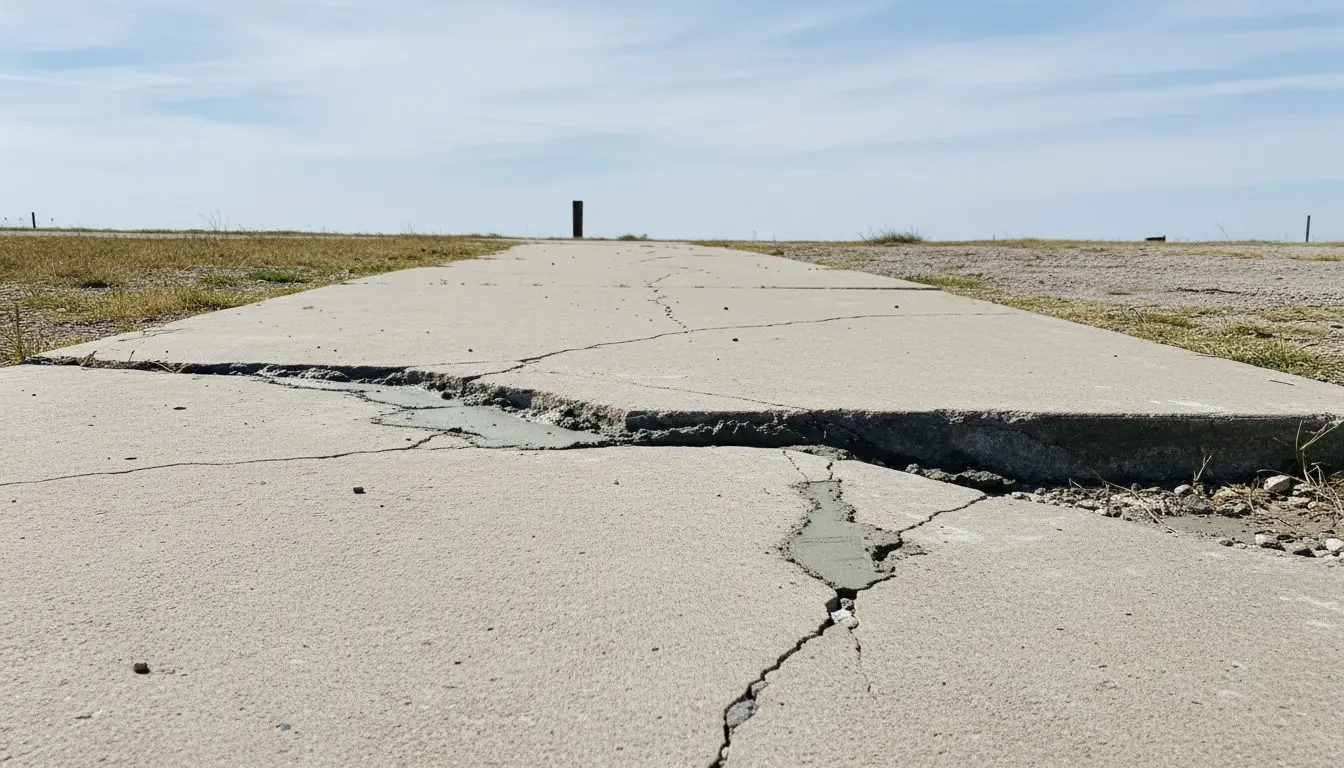
Concrete Repair in Little Rock
Concrete Repair That Tells You the Truth About What Failed
Cracked, sunken or spalled concrete diagnosed on site, then patched, releveled or replaced, only where replacement is the honest answer.
What Actually Happens When Concrete Fails Here
You get an honest diagnosis of why the concrete failed and the least expensive fix that actually solves it.
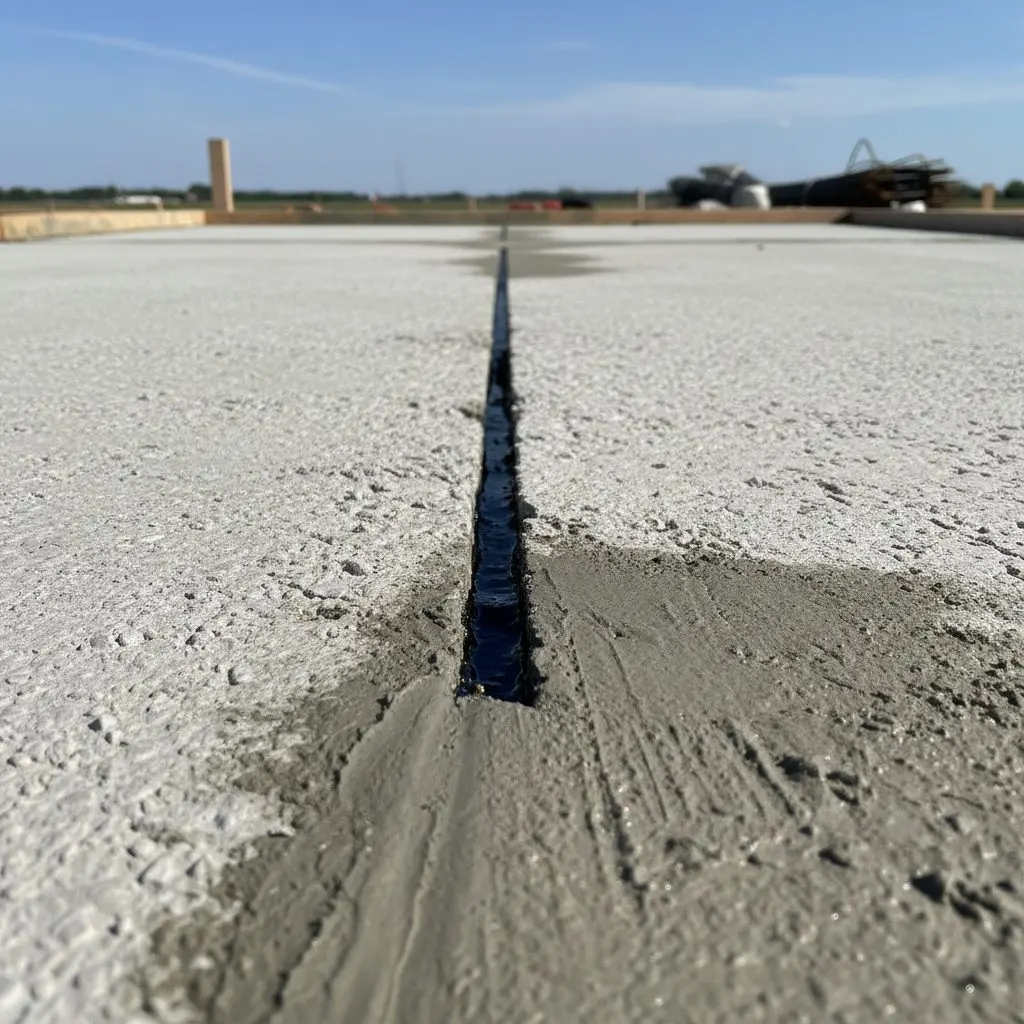
This category covers crack repair, releveling a sunken slab, resurfacing a worn or scaling surface, and replacing sections too far gone to save.
It does not cover a first-time pour on new ground, which sits under Driveways and Parking, Patios and Walkways or Foundations and Slabs, or a stamped or stained finish applied to sound concrete, which is Decorative Concrete.
Over 600 driveways, walks, patios and slabs repaired, releveled or resurfaced across central Arkansas since 2011, from single cracks to full section replacements.
Most calls are about a settled slab section, a crack that has opened wider over a year or two, or a driveway that scales and flakes after a hard winter.
A settled slab is releveled with polyurethane foam, not mudjacking slurry, because the foam sets in under an hour and adds no extra weight to soil that is already moving. A crack over an eighth of an inch is routed and filled with semi-rigid epoxy rather than surface caulk, which stops it reopening at the same spot.
Homeowners with a driveway that has sunk at one edge, and sellers who need a cracked walkway fixed before a home inspection finds it first and before it becomes a buyer's problem to raise.
Ask Little Rock Concrete Elite for a free look at what actually failed, at (501) 555-0168. You go from stepping around a crack every day to walking across a slab that is flat again!
Everything included in a concrete repair job
One visit diagnoses the problem, and the fix is priced before any work starts.
- Sunken or settled slab releveling
- Structural crack repair
- Spalled or scaled surface resurfacing
- Full or partial slab replacement
- Base repair under a settled edge
- Control joint recutting
- Drainage correction to stop it happening again
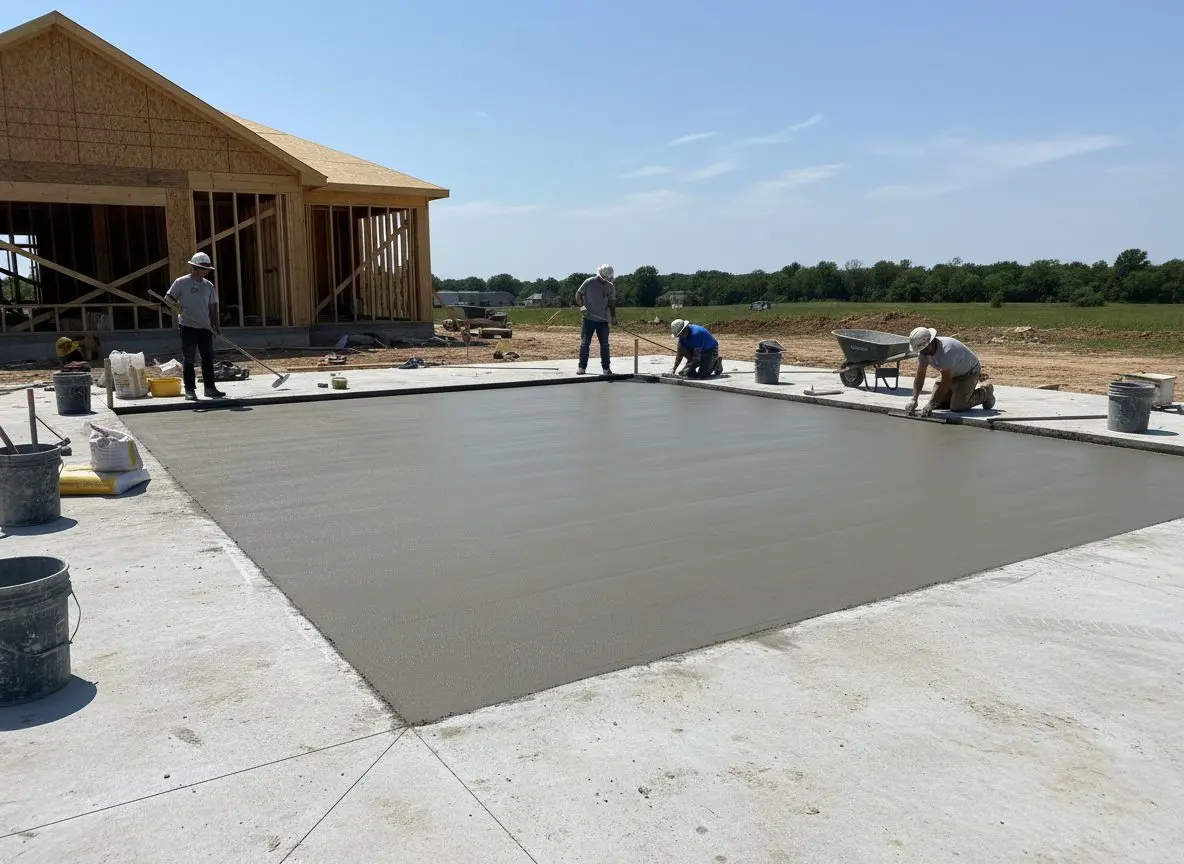
Repair or replace, which one your concrete needs
Most sunken or cracked concrete can be saved without tearing it out.
Leveling and crack repair is right wherever the slab itself is still sound, meaning the concrete is intact and the problem is that it has sunk, cracked in one place, or worn at the surface rather than broken apart.
Replacement is what a slab cracked into several panels, broken through its full depth, or settled so far it can no longer be leveled actually needs, because repairing damage that extensive only delays a failure that is already underway.
Little Rock Concrete Elite tells you which one on the site visit itself, including the times a slab everyone assumed was ruined turns out to be a straightforward repair instead.
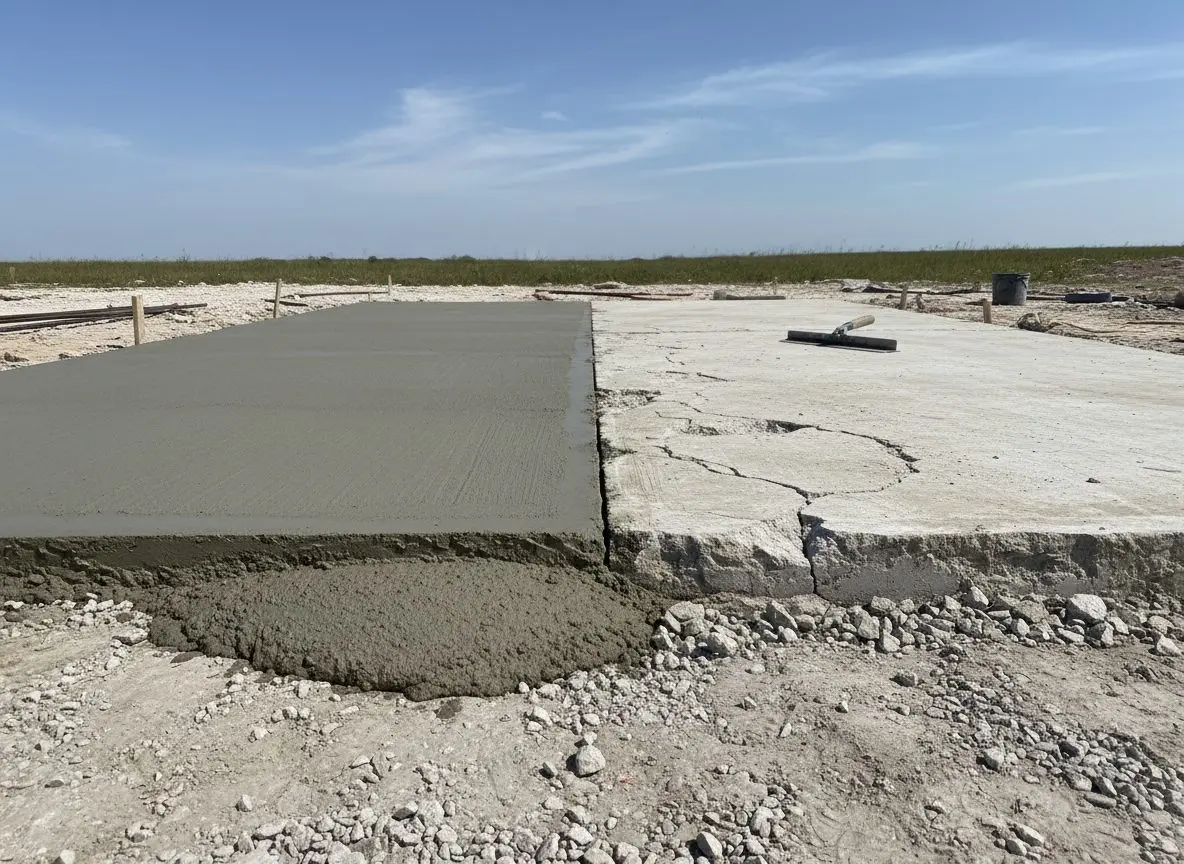
Foam under the slab, epoxy in the crack, never slurry
Polyurethane foam leveling and epoxy crack injection, not mudjacking slurry and surface caulk.
Settled slabs are releveled with two-part polyurethane foam injected through small drilled ports, which cures in under an hour and weighs a fraction of the mudjacking slurry it replaced, so it does not add load to soil that is already moving.
Structural cracks over an eighth of an inch are routed and filled with semi-rigid epoxy rather than surface sealant, which bonds into the crack instead of sitting on top of it. A section too broken to save is saw cut to the nearest joint, never patched mid-panel, and replaced with 4,000 PSI concrete matched to the surrounding slab.
New joints are cut to match the existing panel layout so the repair reads as part of the original pour.
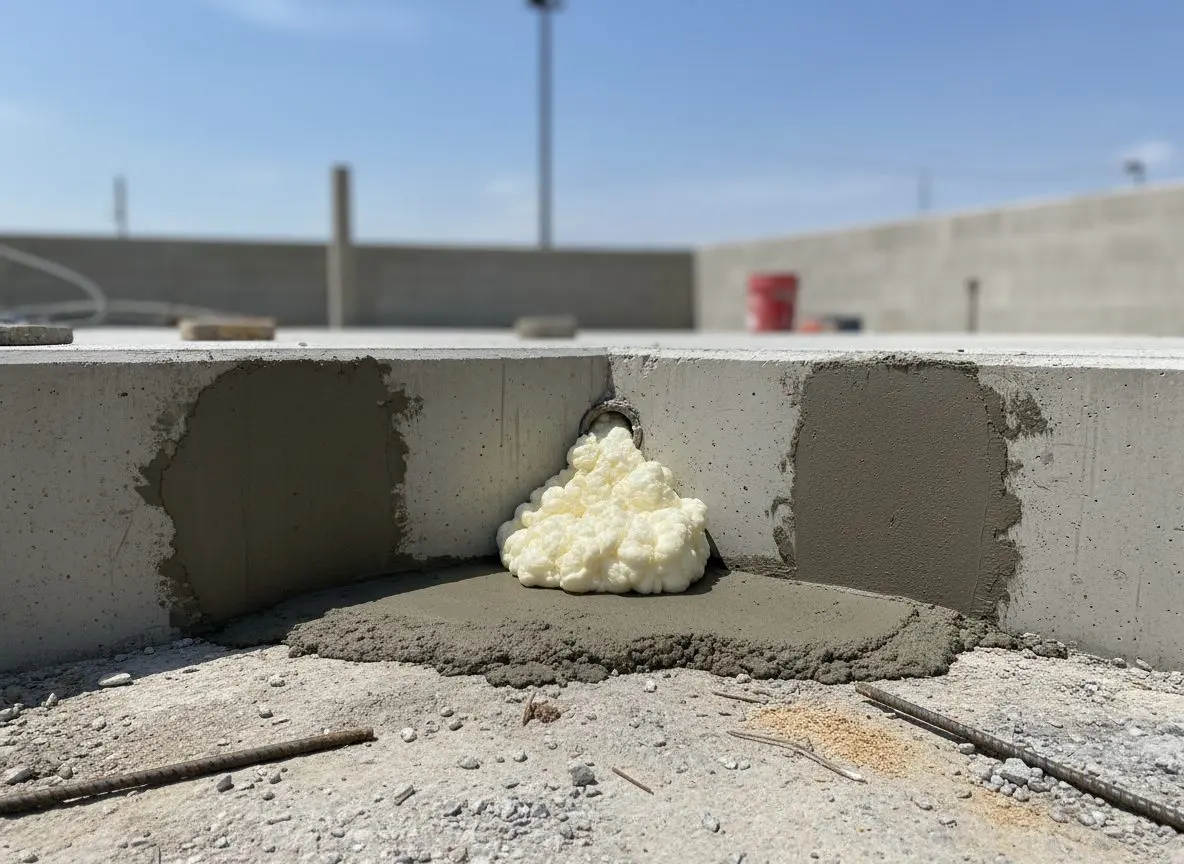
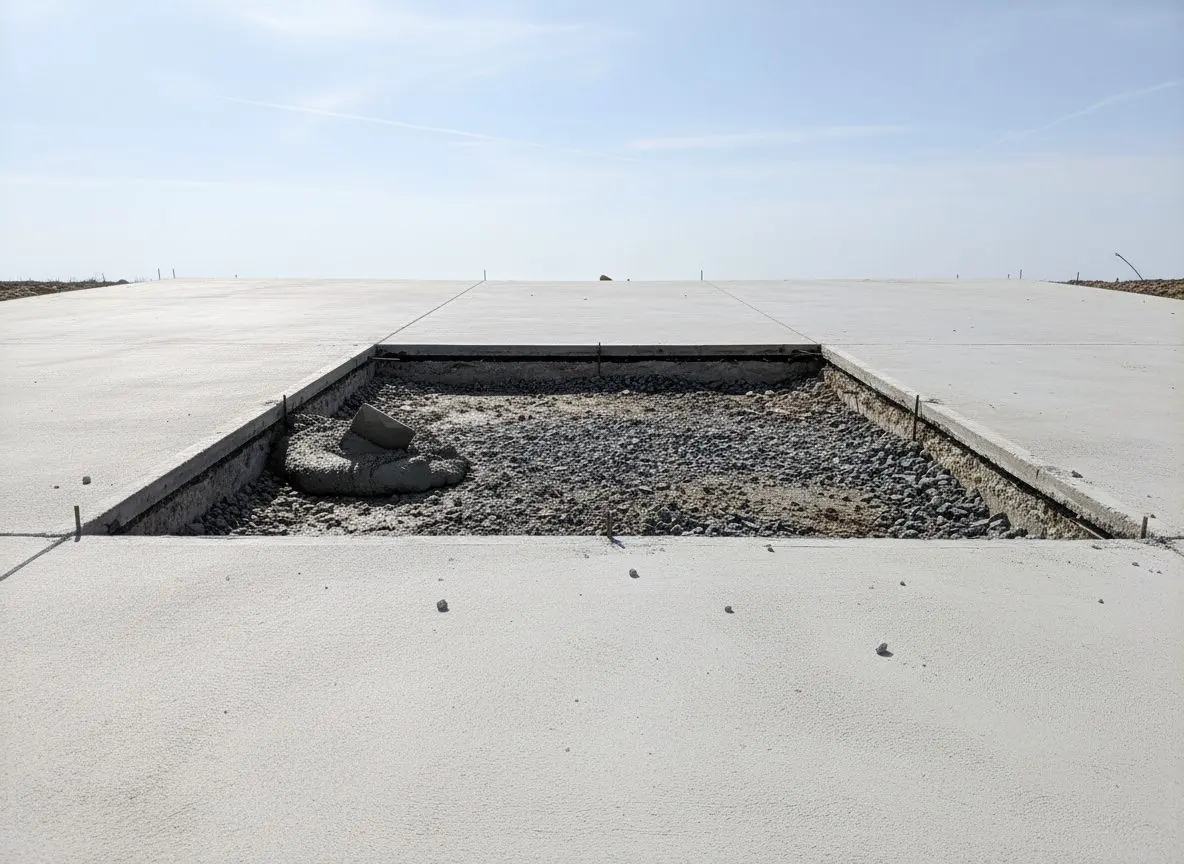
- Polyurethane foam leveling, not mudjacking
- Semi-rigid epoxy for cracks over 1/8 inch
- Full-depth saw cut removal to the nearest joint
- 4,000 PSI mix matched to the existing slab
- New joints cut to the original panel layout
- Finish matched to the surrounding surface
Call Little Rock Concrete Elite for a free look at the damage and a straight repair or replace answer before any work is booked.
(501) 555-0168Why does one repair cost more than another the same size?
The steps above are the same on every job. What moves the number is what actually failed underneath and how much of the slab it has taken with it.
- Repair vs replace
- Leveling and crack repair on sound concrete costs a fraction of tearing out and repouring a section, and is priced separately once the extent of the damage is actually checked.
- Base condition
- A settled slab caused by washed-out base material needs that base rebuilt before any leveling holds, which adds excavation and compaction a surface repair alone does not need.
- How much is cracked
- One isolated crack is a short visit; a slab cracked across several panels usually means saw cutting and replacing the whole section rather than filling each crack in turn.
- Finish being matched
- Matching a plain broom finish is quick. Matching a stamped pattern or an aged, faded stain takes more time and a more experienced crew to blend into the original.
- Access to the damage
- Equipment for foam injection or saw cutting needs a clear path to the slab, and a repair behind a gate or up a narrow side yard adds labor a driveway repair does not.
- Drainage correction
- Where storm water caused the failure, regrading or adding drainage away from the slab is priced alongside the repair, since fixing the slab without it invites the same failure back.
Most of this only becomes clear once somebody has actually looked at the damage, which is what the free estimate is for. Get a free quote
From your call to a cured slab
Most driveways and patios run five to ten days from the first call to a slab you can park or walk on.
Call Little Rock Concrete Elite for a free estimate, or ask for a callback the same day.
Get a free quoteWhat a repaired driveway is worth at resale
A cracked or sunken driveway is exactly what a buyer's inspector writes up first.
No remodeling report puts a resale percentage on concrete repair, because studies like the Remodeling Impact Report price whole projects a buyer shops for, such as a new patio or a driveway replacement, not patch work on existing concrete.
What repair does at resale is remove a negotiating point rather than add one. A visibly cracked, uneven or scaling driveway is one of the first things a home inspection flags, and an agent will use it to push for a price reduction whether the damage is cosmetic or not. Fixing it before the house is listed takes that line off the report, worth more to most sellers than a percentage figure could ever prove.
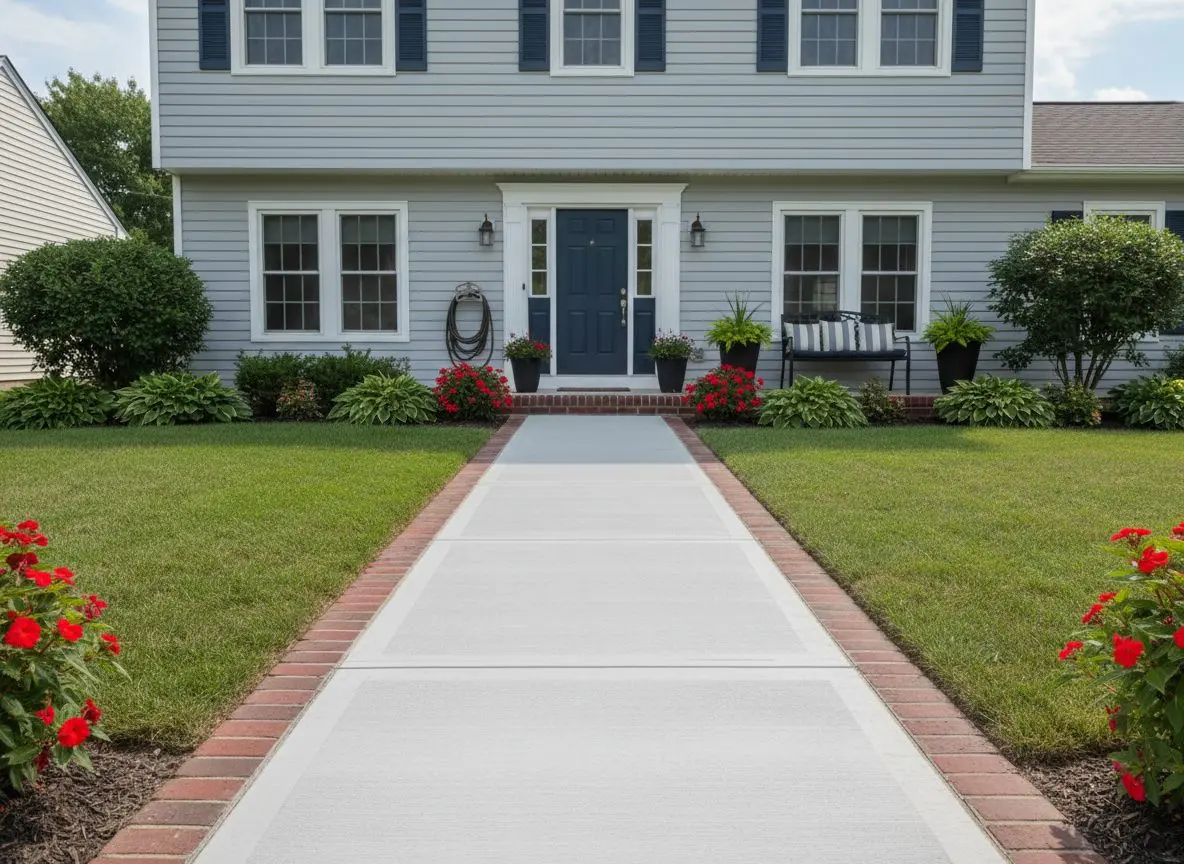
Why concrete fails on Little Rock clay
Expansive clay swells and shrinks under a slab, a wet surface that freezes overnight still scales concrete here, and heavy storms wash out the base under a slab edge.
- Clay swells and pulls away underneath
- The clay under most Little Rock properties swells when it rains and shrinks in a dry spell, and a slab poured on it moves with the ground rather than sitting still, so a driveway or walk here settles unevenly in a way it would not on stable soil.
- Wet-then-freeze scaling in a mild winter
- Arkansas winters freeze only a handful of nights a year, but a slab that gets wet from rain and then freezes overnight scales and flakes at the surface, especially where an older driveway was never poured with air-entrained concrete to begin with.
- Storm water undermines the base at an edge
- Heavy summer storms wash fine base material out from under a slab edge where drainage was never graded away from it, hollowing out the support underneath and leaving the edge to crack and drop under the next car that drives over it.
Concrete repairs finished around Little Rock
Real repairs finished for homeowners and sellers across central Arkansas, not staged renderings.
-
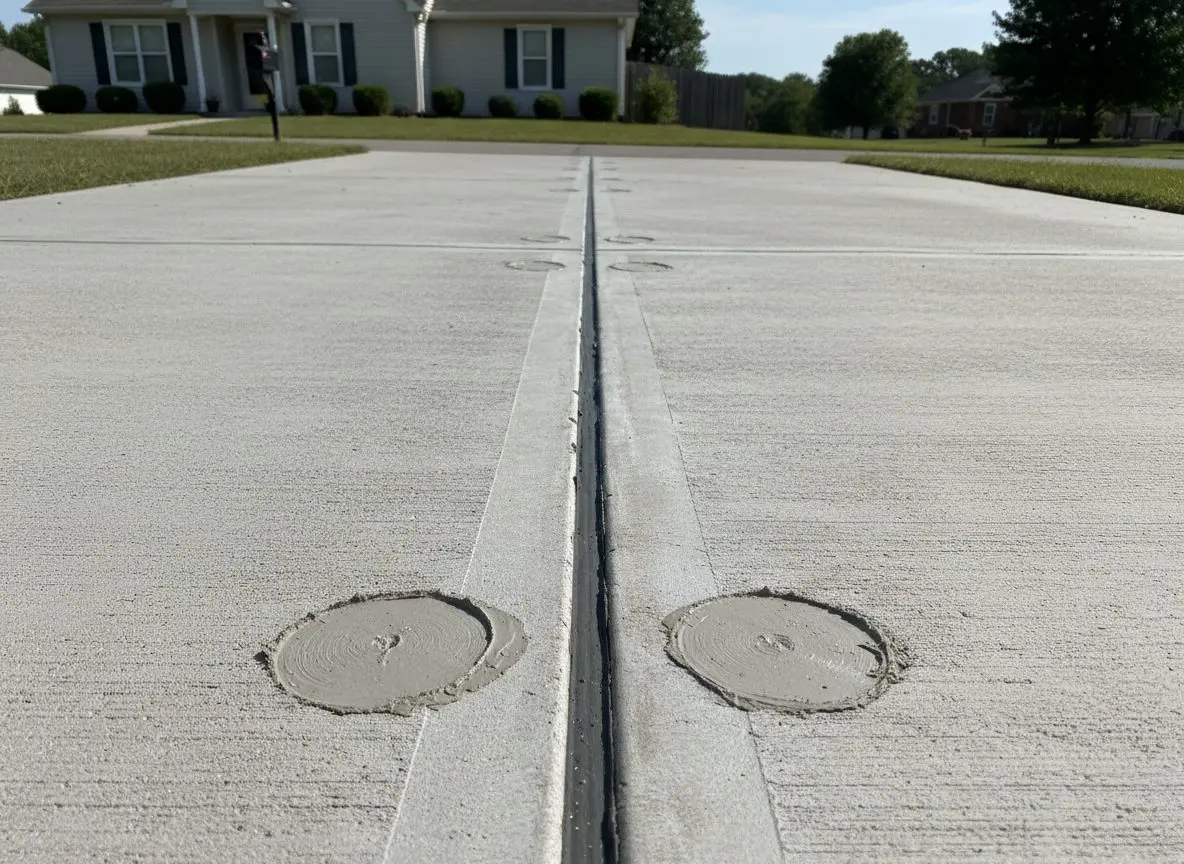
Sunken driveway releveling
Conway
A driveway that had settled six inches at one edge, raised back level with polyurethane foam in a single visit and no digging.
-
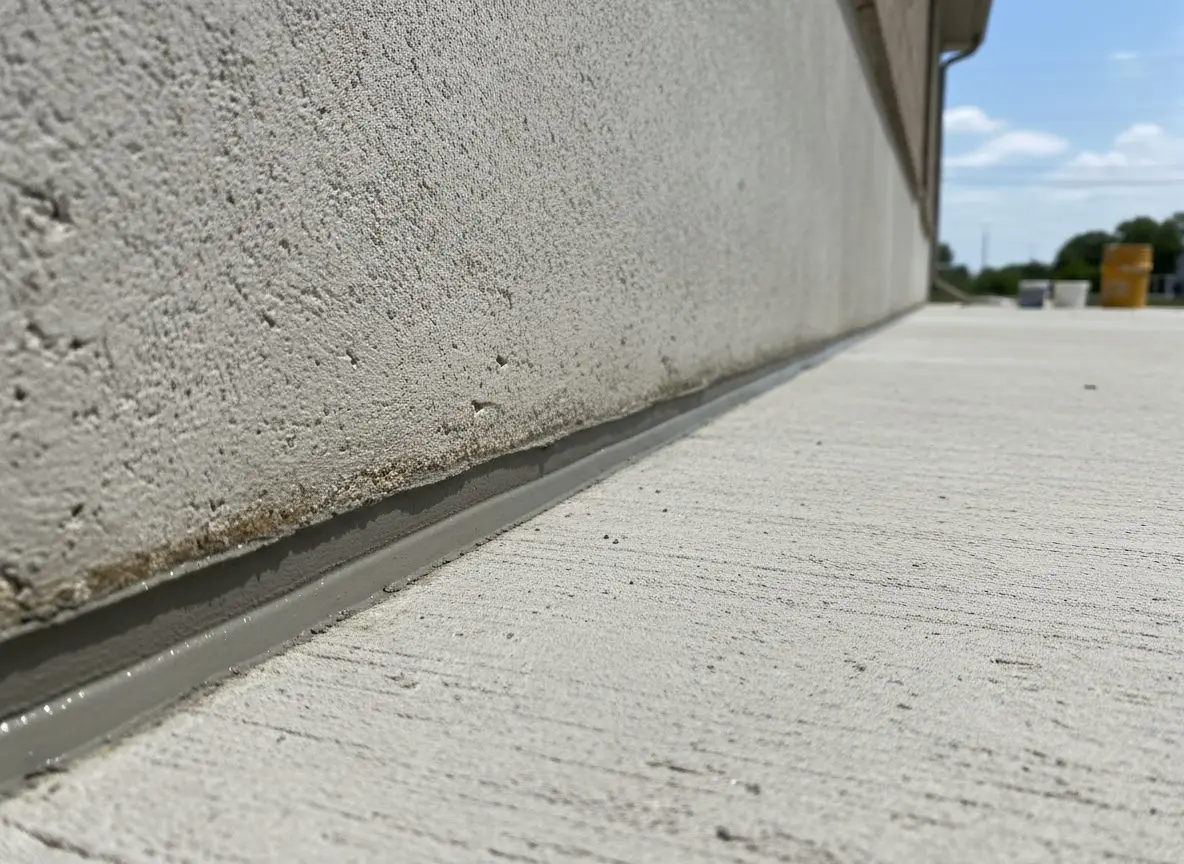
Foundation-adjacent crack repair
Little Rock
A structural crack along a patio slab routed and filled with epoxy after storm water had washed out the base beneath it.
-
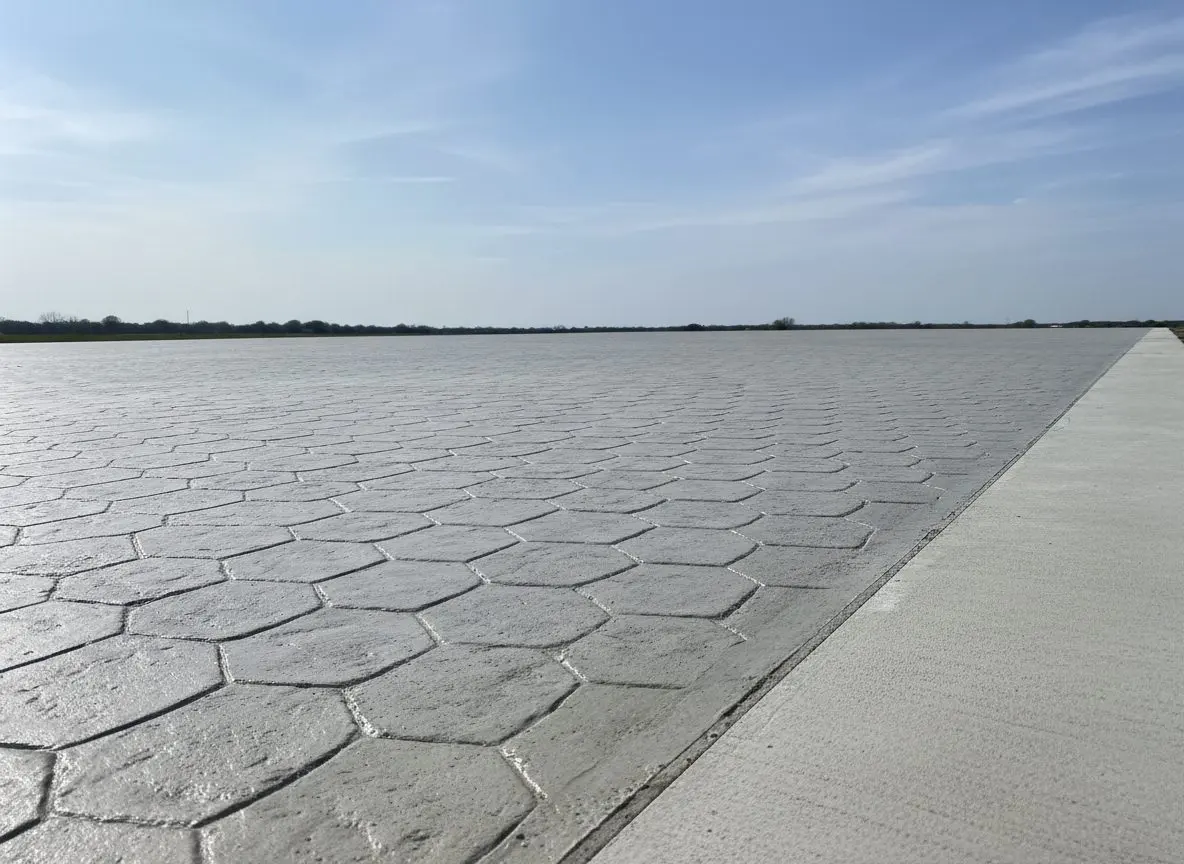
Scaled surface resurfacing
Sherwood
A driveway surface flaking from years of wet-freeze cycles, ground back and resurfaced with a new wear layer.
-
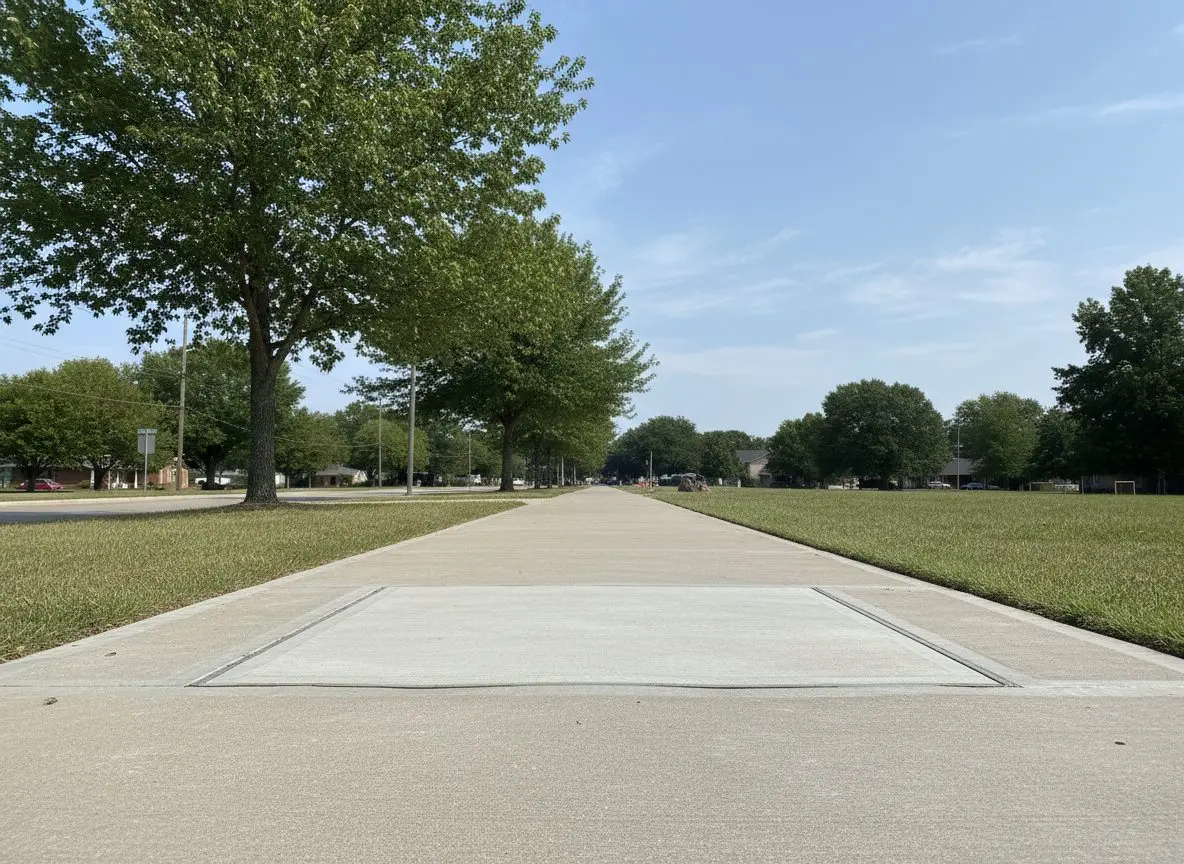
Walkway panel replacement
North Little Rock
Two cracked panels of a front walkway saw cut out and replaced, the new joints matched to the original panel layout.
-
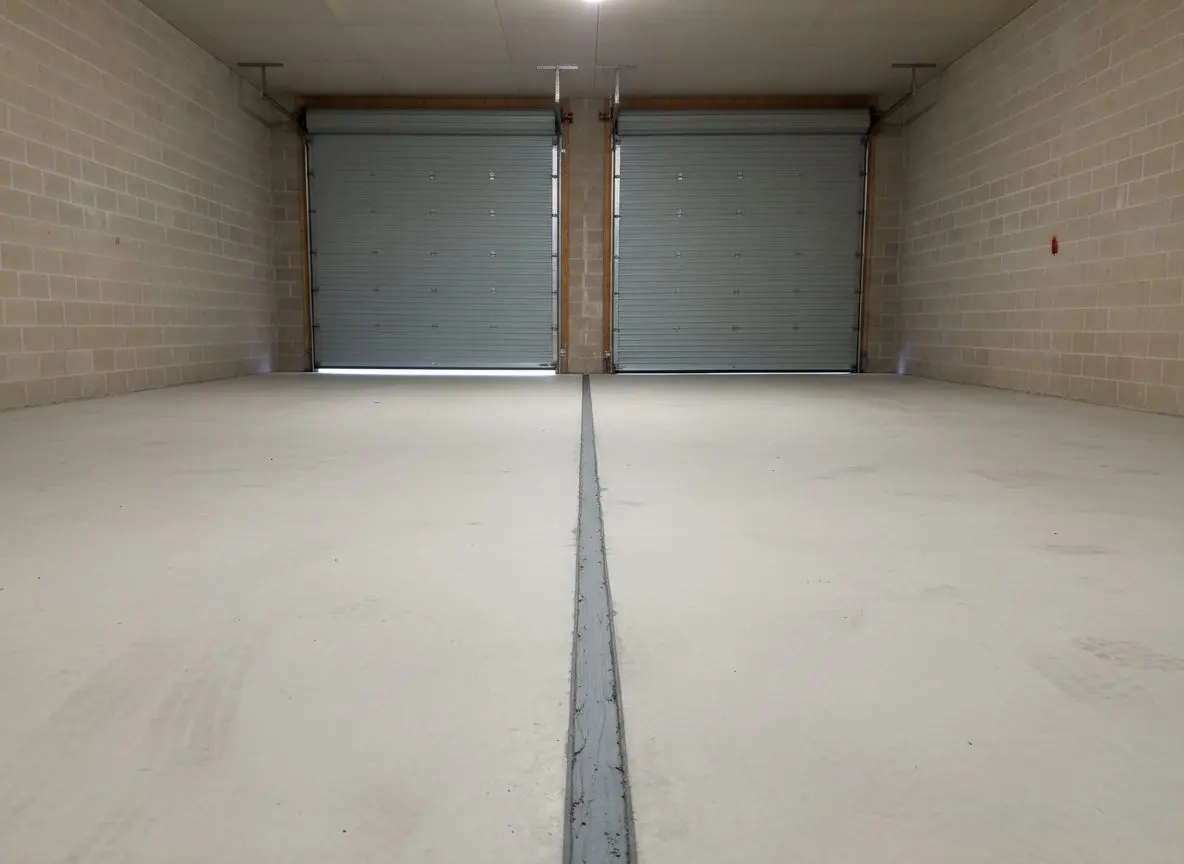
Garage slab crack injection
Jacksonville
A long structural crack across a garage floor routed and filled after the client noticed it widening over two winters.
-
Patio full section replacement
Benton
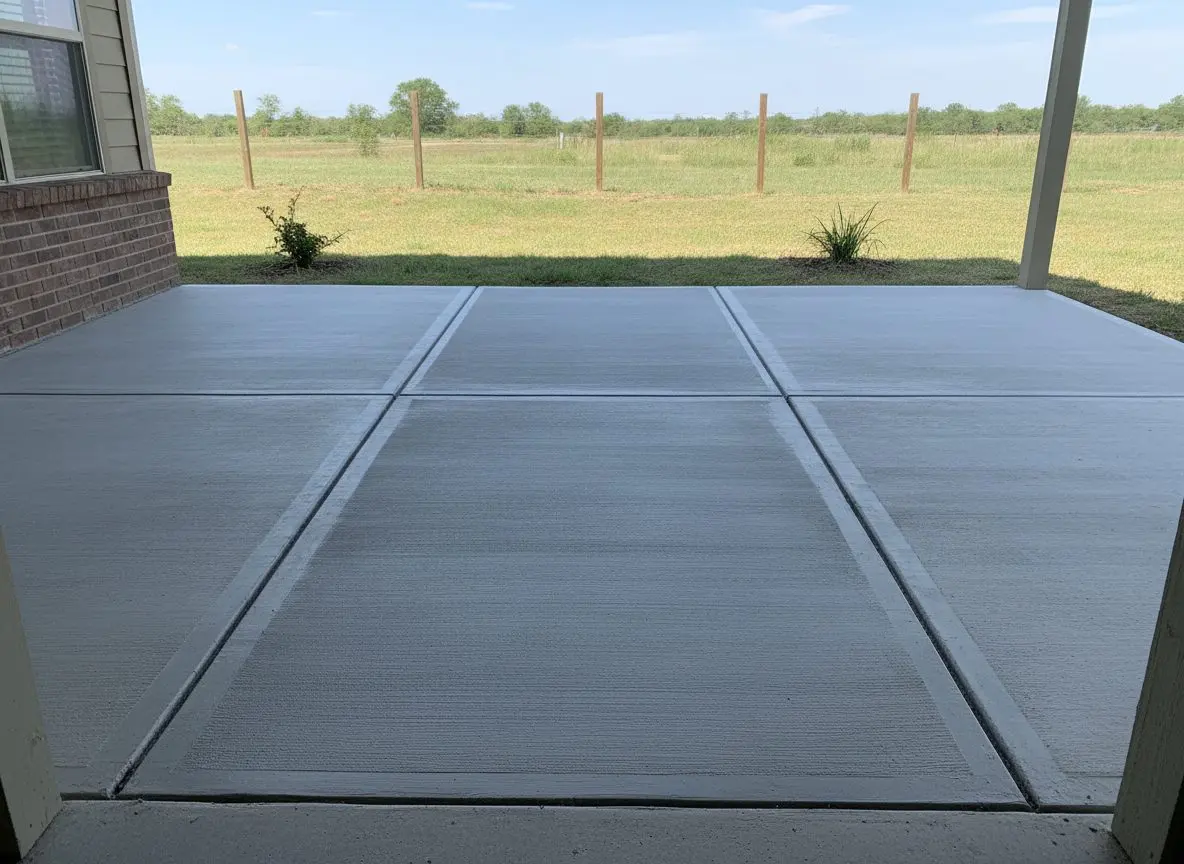
A patio corner broken into several pieces removed and repoured, the new section matched to the existing broom finish and edging.
What customers said after the repair was finished
-
Rated 5 out of 5
Front steps had dropped a good two inches off the porch. They lifted them rather than break them out, which I did not know could be done and cost a fraction of what I was braced for.
Ed L. North Little Rock Slab lifting -
Rated 5 out of 5
Walk was lifting at three slabs where a root had got under it. They ground flat what they could and replaced the two that were past saving. Told me straight the tree will do it again in ten years.
Charlene B. Sherwood Walkway repair -
Rated 5 out of 5
Called about a crack across the garage floor. They looked at it and said it was cosmetic and not worth what I would pay to have it fixed. No charge for coming out. Used them later for the drive.
Lamar F. Bryant Crack repair
Tell us what the concrete is doing and someone will come out and look at it before you commit to anything.
Get a free quoteFAQs
Frequently asked questions
Common questions about concrete repair
Is our driveway too far gone to repair?
Usually not. Most sunken or cracked driveways are still structurally sound underneath the damage, and leveling or crack repair fixes them for a fraction of a new pour. A slab broken into several panels or cracked through its full depth is the exception where replacement is genuinely the better answer.
Does a repair quote include fixing what caused it?
Where a bad drainage or base issue caused the failure, correcting it is included in the quote, because releveling or patching a slab without fixing what undermined it in the first place only buys a year or two before it happens again.
How many days should we plan for a repair?
Crack repair and slab leveling are usually a single day's work. A full section replacement runs three to five days once the old concrete is removed, a new base is compacted, and the fresh pour is given time to cure before it takes any weight.
How do you decide between repair and replace?
We look at how much of the slab is affected, whether the concrete itself is still sound under the damage, and what caused it in the first place. You get a straight answer on the visit, including when repair is genuinely the right call over a full replacement.
What makes one repair cost more than another?
How much of the slab is affected, what caused the failure underneath it, and whether the finish being matched is a plain broom surface or a stamped or stained one that takes longer to blend in.
Can we still use the driveway during a repair?
Crack repair and leveling are usually finished the same day, so the driveway is back in use once the epoxy or foam has set. A section replacement needs the new concrete kept clear of traffic while it cures, which is a few days depending on the weather.
What do you actually inject under a sunken slab?
A two-part polyurethane foam, not mudjacking slurry. It expands and cures in under an hour, weighs a fraction of the slurry it replaced, and does not add the load to the ground that caused the slab to settle in the first place.
Do we need to move anything before you arrive?
Clear the area being worked on and any vehicles from the driveway on the day of the visit. Foam injection and saw cutting both need equipment on site, so a clear, dry path to the damage is the main thing that speeds a repair up and keeps the crew on schedule.
Will the repair be visible afterwards?
A leveled slab reads as flat and even, though a hairline seam at the crack or the injection ports is usually visible up close. Where the finish is matched carefully, most repairs are hard to spot from a normal walking distance once cured.
Do you repair concrete you did not originally pour?
Yes, most of the repair work is on driveways, walks and patios poured by someone else, not just our own jobs. We inspect it on the visit the same way we would our own work and give you a repair or replace answer based on what is actually there.
Our slab has been sinking for years, is it too late?
Foam leveling works on concrete that has already settled, not just fresh damage, as long as the slab itself has not cracked into pieces. Even a driveway that has been dropping for years can usually be raised back level in a single visit.
What stops the same crack coming back?
An epoxy-filled crack is bonded into the concrete rather than sitting on the surface, and a new control joint is cut nearby to give any future movement somewhere else to go. Where drainage caused the original failure, correcting that is what actually stops it repeating.
Little Rock Concrete Elite
Pouring concrete across central Arkansas since 2011.
Little Rock Concrete Elite pours driveways, patios, foundations, garage slabs and steps across Little Rock and the surrounding towns of central Arkansas, along with repair, resurfacing and decorative finishes like stamped and stained concrete for slabs already showing their age.
Why call Little Rock Concrete Elite for the pour?
- Pouring driveways, patios, foundations and repairs since 2011
- A written quote naming the mix, thickness and joints, not a guess
- Same day callback on every call
- General liability and workers compensation cover on every job
- Crews who build for Arkansas clay and heat, not against them
Central Arkansas's clay soil moves every slab poured on it, and the difference between a driveway that lasts and one that cracks at the joints within a year is what goes in before the truck ever arrives. Little Rock Concrete Elite has been getting that part right in Little Rock since 2011. Call (501) 555-0168 for a free estimate, or ask for a same day callback.
Give us a call
office@littlerockconcreteelite.com
Send us a message
400 W Capitol Ave, Ste 1700, Little Rock, AR, 72201
Where to find us