
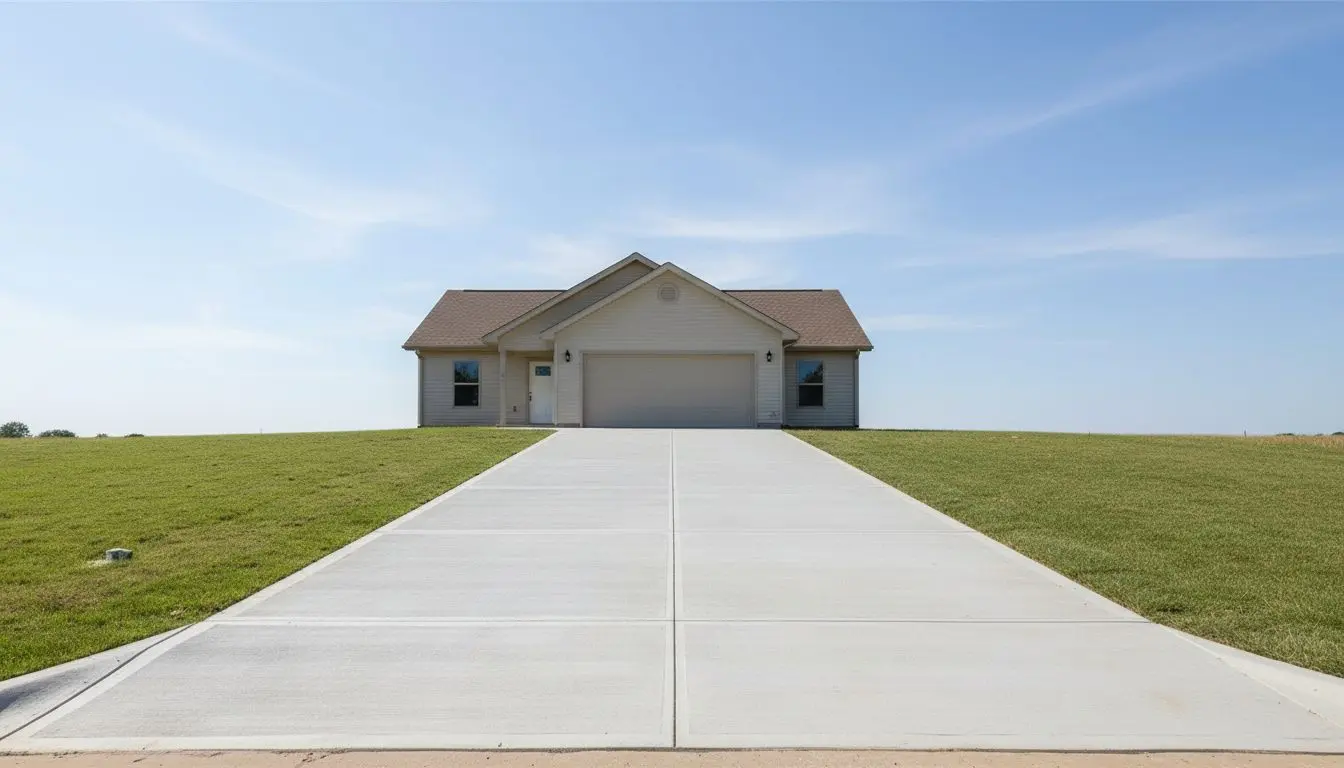
Driveways and Parking in Little Rock
Concrete Driveways in Little Rock
Poured on a base built for your soil, jointed to control where it cracks, and finished the same week you call.
A driveway built to carry a vehicle, not just look like one
You end up with a driveway thick and based deep enough to carry a vehicle's weight through an Arkansas summer without a crack.
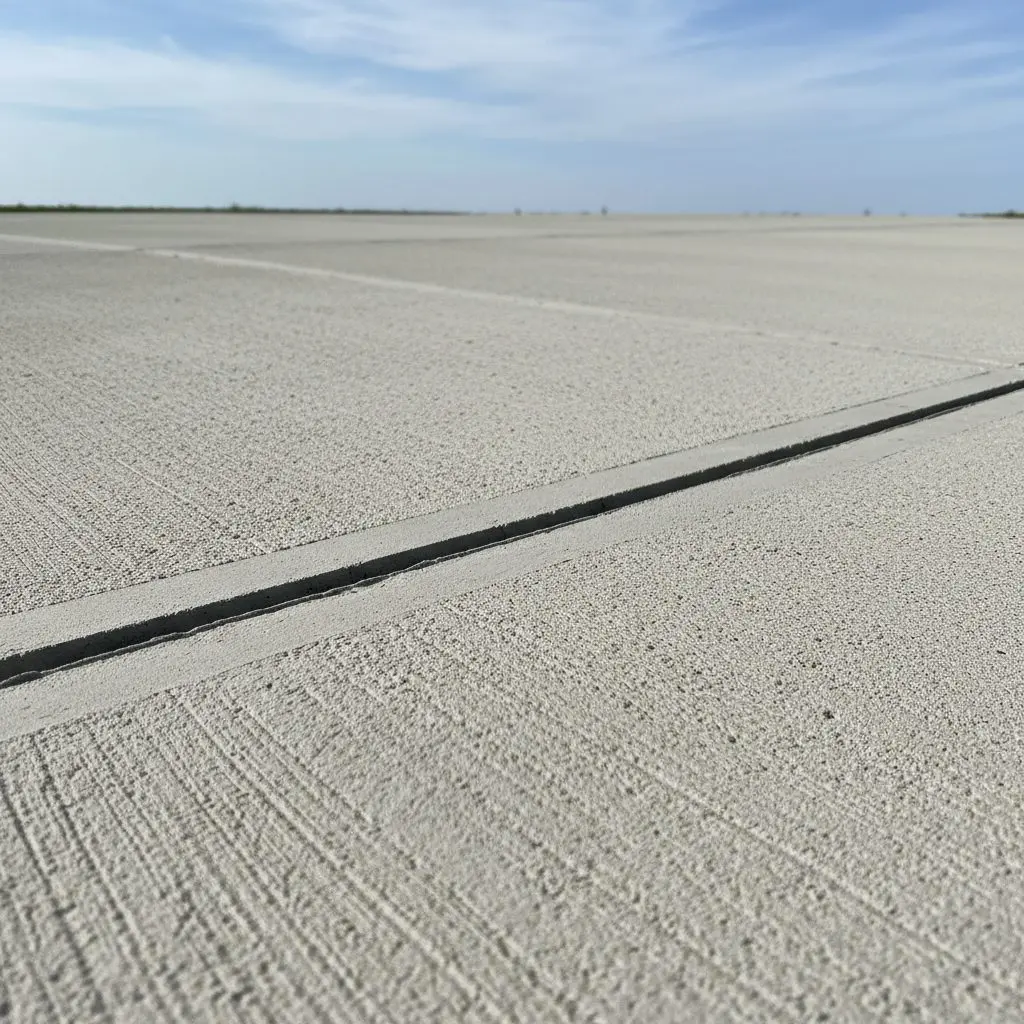
This group covers new driveways, full replacements, widened and extended driveways, circular turnarounds, and RV, boat and garage parking pads, all poured to carry vehicle weight rather than just foot traffic.
It does not cover the walkway from the driveway to your front door or a patio out back. Those are poured to a lighter spec and belong on the patios and walkways page instead.
Over three hundred driveways poured across Little Rock and nearby towns since 2011, from single-car pads to circular drives that turn a car around without backing into the street.
A straight, single driveway from the street to a garage is the most common job. After that comes a driveway widened or extended to fit two cars, a circular or horseshoe drive that avoids reversing onto a busy road, and a parking pad poured beside the house for an RV, a boat or a work truck.
Every driveway goes in at a minimum of 4,000 PSI, the mix strength rated to carry a vehicle's weight without the surface breaking down under it, which is not the mix used on a footpath or a patio.
A homeowner replacing a driveway that has cracked along the same line every summer since it went in, and a family adding a second pad because a teenager just started driving.
Call (501) 555-0168 for a free estimate on your driveway. You will go from parking on a slab that heaves and cracks every spring to one that sits flat through the next ten Arkansas summers!
What's included in a new driveway pour
One crew handles the tear-out, the base and the pour, so nothing sits half done between contractors.
- New driveway pours for garage additions
- Full driveway replacement and tear-out
- Extending a single driveway to two cars
- RV, boat and work truck parking pads
- Circular and turnaround drives
- Garage apron and approach slabs
- Parking pads for detached garages and shops
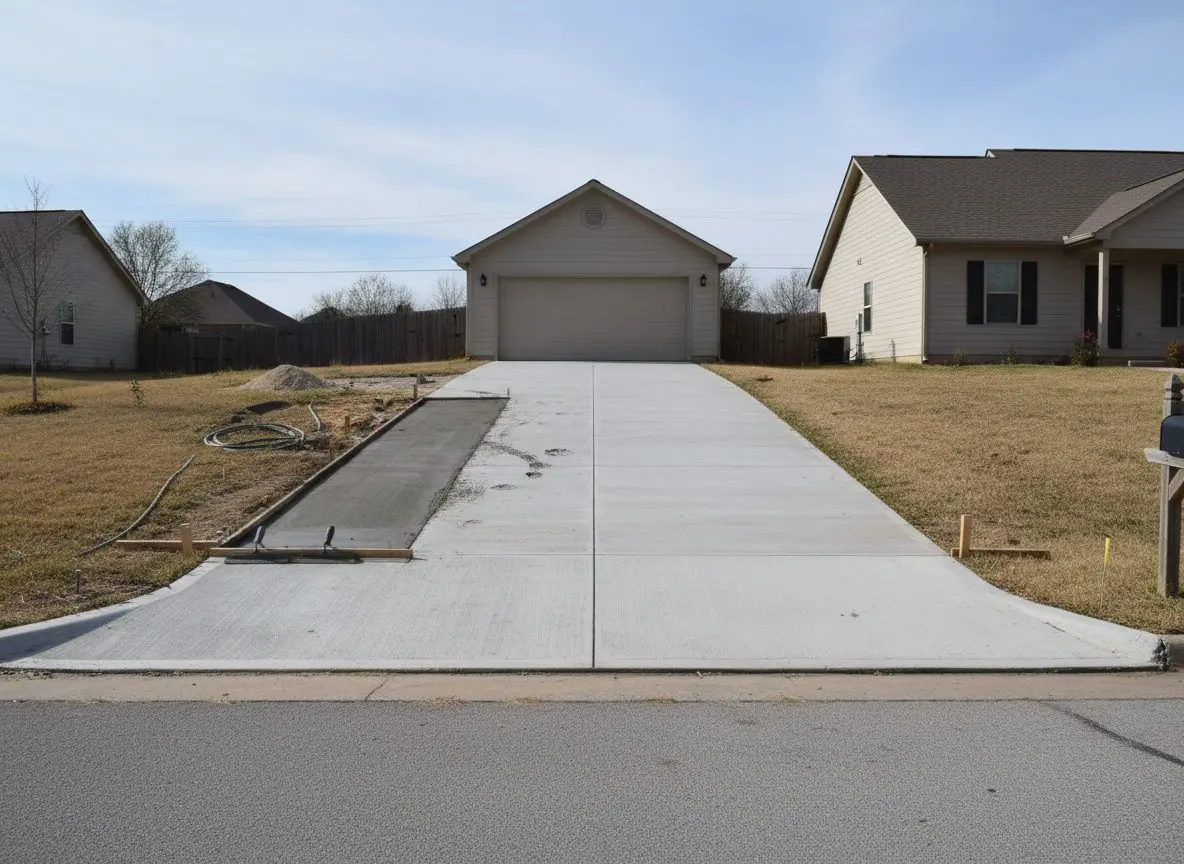
Widen the old driveway or replace it, which one you need
A driveway that has run out of room does not always have to come out.
Widening works wherever the existing slab is still flat and tight at its joints, with no section sitting higher than the one beside it. The new strip is poured against the old one and jointed so the two can move independently.
Replacing is what a slab already cracked away from its joints or dropped at the apron needs, since clay that has moved once keeps moving and drags a new section along the tie. It is also the only route to one unbroken surface with no color line down it.
Little Rock Concrete Elite says which one your driveway needs before a quote is written, including the times a sound old slab only needs a new strip poured alongside it rather than coming out.
What goes into a driveway built to carry a vehicle
Four thousand PSI, a compacted base and steel or fiber reinforcement, decided before the truck arrives.
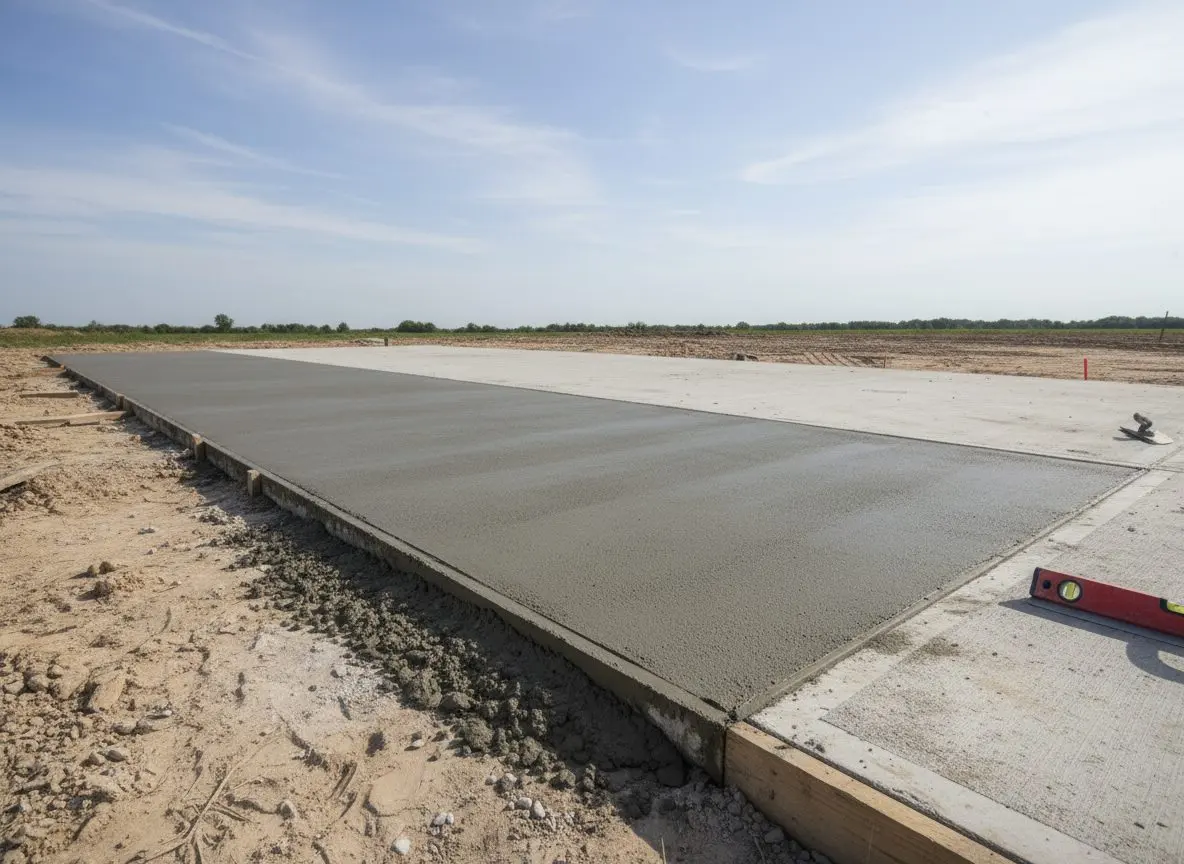
A driveway is poured at a minimum of 4,000 PSI, the mix strength rated to carry a vehicle's weight without breaking down under repeated loading. That is heavier than a patio or footpath ever needs.
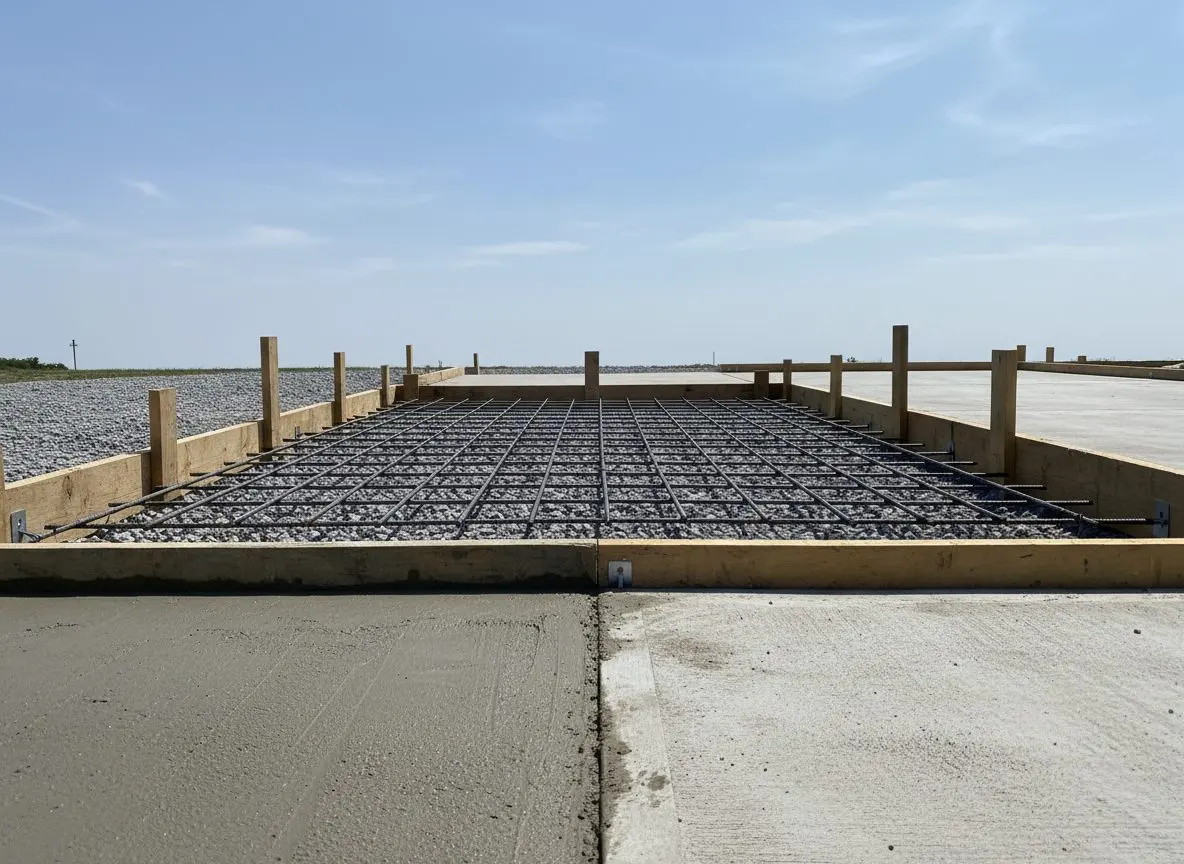
The base runs a minimum of four inches of compacted crushed stone, deeper where the clay is soft, since a base that shifts under a vehicle is what actually cracks a driveway. Reinforcement is fiber as standard, steel rebar where a boat, an RV or a work truck sits regularly.
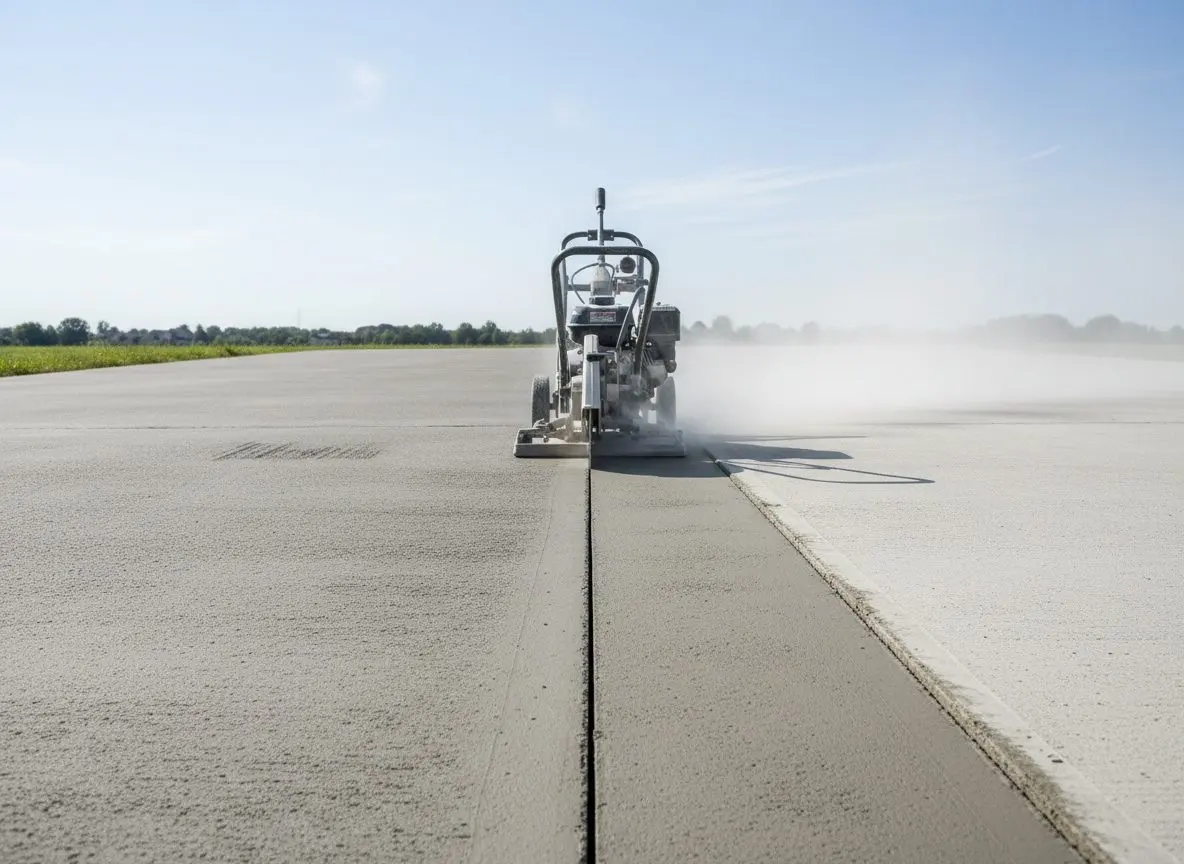
Control joints are saw cut within 24 hours, spaced at roughly two and a half times the slab's thickness in feet, so the concrete cracks along a joint instead of across the surface.
- 4,000 PSI mix, minimum, under every driveway
- Four-inch compacted crushed stone base, minimum
- Fiber standard, steel rebar for trucks and RVs
- Control joints cut within 24 hours
- Broom finish standard, for wet-weather traction
- Subgrade graded to fall away from the garage
Call for a free estimate and get the mix strength, base depth and reinforcement in writing before you decide.
(501) 555-0168Why does one driveway cost more than another the same size?
A driveway prices differently depending on what it has to carry and what is already on the ground. The list below is what actually moves the number.
- Truck access
- A driveway a truck can back straight up to and pour directly into costs less than one reached down a narrow side yard, where concrete has to be pumped or wheeled in by hand instead.
- Old surface removal
- A new pour over prepared ground costs less than one that starts with breaking out and hauling away an old asphalt or concrete driveway before any new base goes down.
- Base depth on clay
- Little Rock clay swells and shrinks with the season, so a base that holds a driveway flat under a vehicle's weight needs more excavation and compaction than a site on stable ground.
- Thickness and reinforcement
- A driveway carrying a daily car needs a different depth and reinforcement than one that also has to take a boat, an RV or a work truck parked on it regularly.
- Size and shape
- Square footage sets the base cost, but a circular turnaround, an extra parking pad or a curved apron all add form work a plain rectangle the same size does not need.
- Finish
- A broom finish is the fastest and least expensive surface to lay. Stamped or exposed aggregate work takes longer and needs a more skilled crew to do it well.
Most of this is only clear once somebody has walked the site and seen what the old driveway or the ground underneath it is doing, which is what the free estimate is for. Get a free quote
From your call to a cured slab
Most driveways and patios run five to ten days from the first call to a slab you can park or walk on.
Call Little Rock Concrete Elite for a free estimate, or ask for a callback the same day.
Get a free quoteWhat a new driveway is worth when you sell
A driveway does not add drama to a listing, it removes a reason to negotiate the price down.
No published resale report prices a concrete driveway on its own. The national studies track whole remodeling projects, a kitchen or a primary bath, not one slab outside the house, so there is no percentage to quote for Little Rock or anywhere else.
What the studies do not need to prove is what a real estate agent already knows. A cracked or heaved driveway is one of the first things an inspector notes walking up to a listing, and it is the kind of flaw that gets written into a repair request rather than overlooked.
A driveway poured to the right thickness and reinforced for the vehicle it carries does not add a line to the listing. It just stops being a reason to ask for money back.
What Little Rock clay does under a driveway
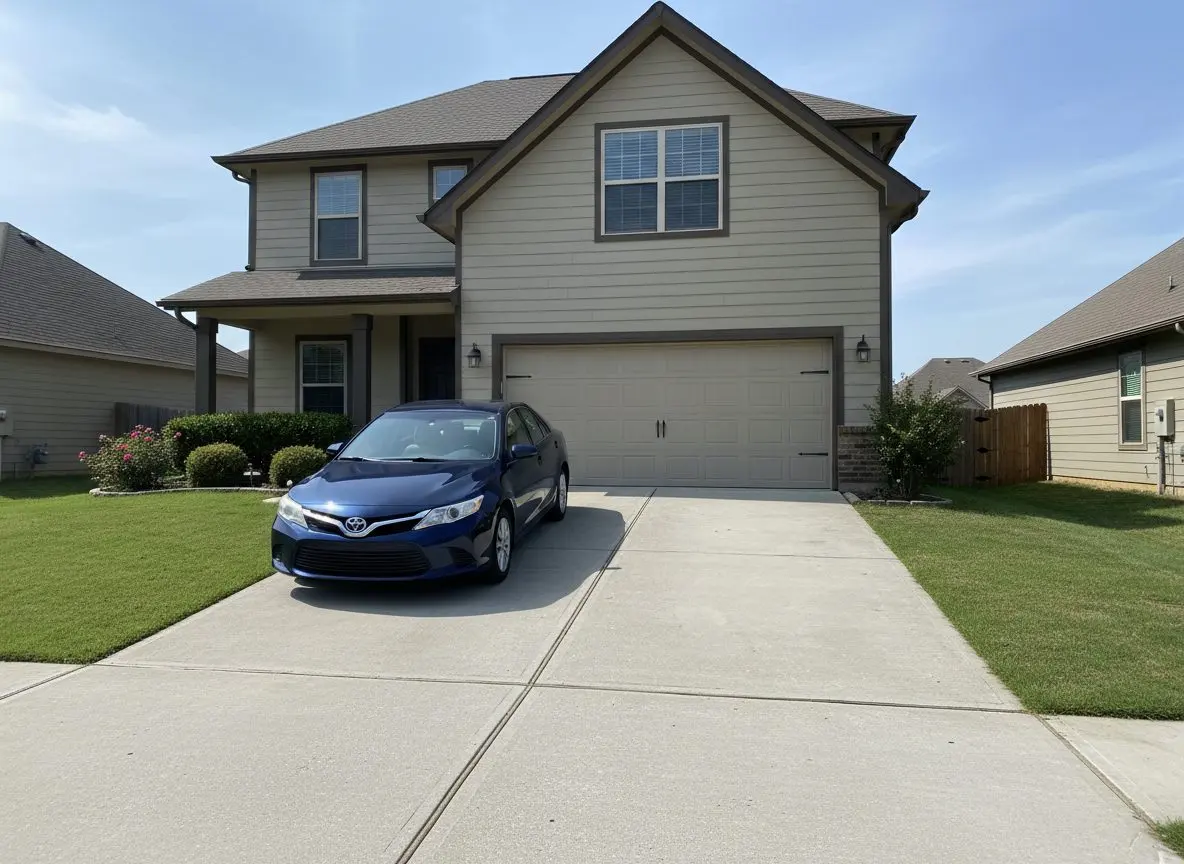
Clay that swells and shrinks, a pour season that runs long and hot, and storms that test the grade all change how a driveway is built here.
- Clay under a slab that carries weight
- Little Rock clay swells in a wet spring and pulls back hard in August, and a driveway also carries a vehicle's weight on top of that movement. A base compacted deeper than the slab is what keeps a car from finding the soft spot underneath.
- A pour season that runs hot
- A driveway is the largest single pour on most properties, and summer heat pushes concrete toward flash setting before a crew can finish. Working the whole slab in one pour, not sections, keeps a hot afternoon from setting one end before the other.
- Storms that test the grade
- Central Arkansas gets heavy, sudden downpours through spring and summer, and a driveway sheds more water at once than almost anything else on the property. Graded even slightly wrong, that runoff heads for the garage instead of away from it.
Driveways finished around Little Rock
Recent driveway pours across Little Rock and the surrounding towns, each one built for the vehicle and the ground it sits on.
-
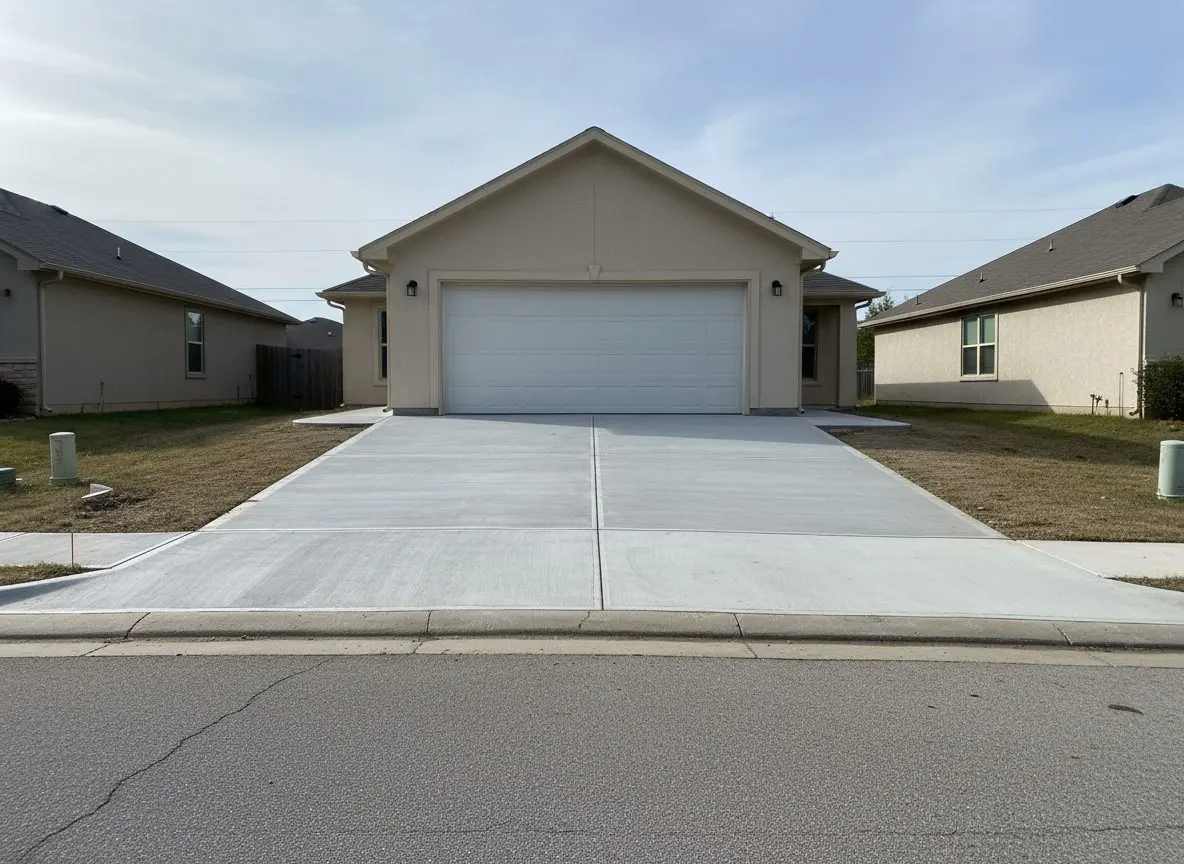
Double-wide driveway repour
Sherwood
A cracked single driveway came out and a wider, reinforced slab went in, based deeper on one side where the clay had already heaved the old pour.
-
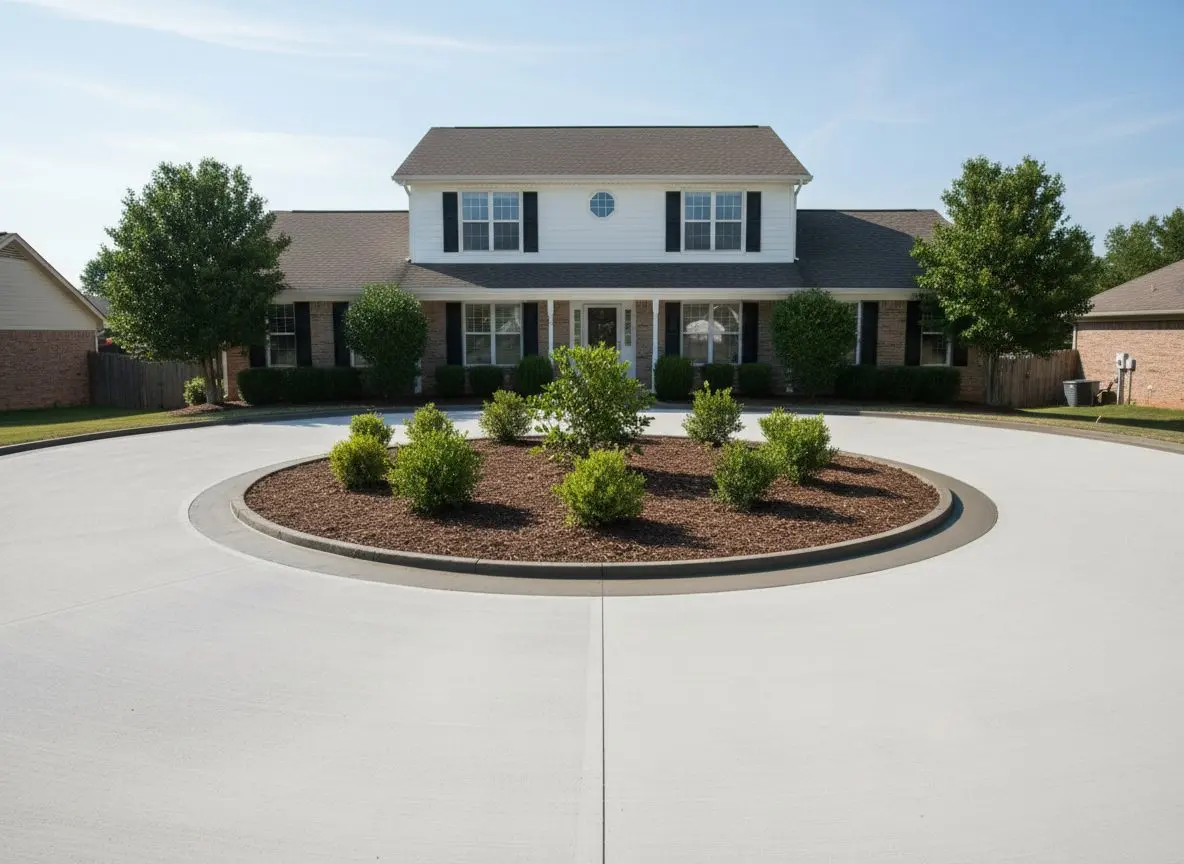
Circular turnaround drive
Maumelle
A long, sloped driveway gained a circular turnaround so a car no longer has to reverse onto a busy road, poured with curved forms built on site.
-
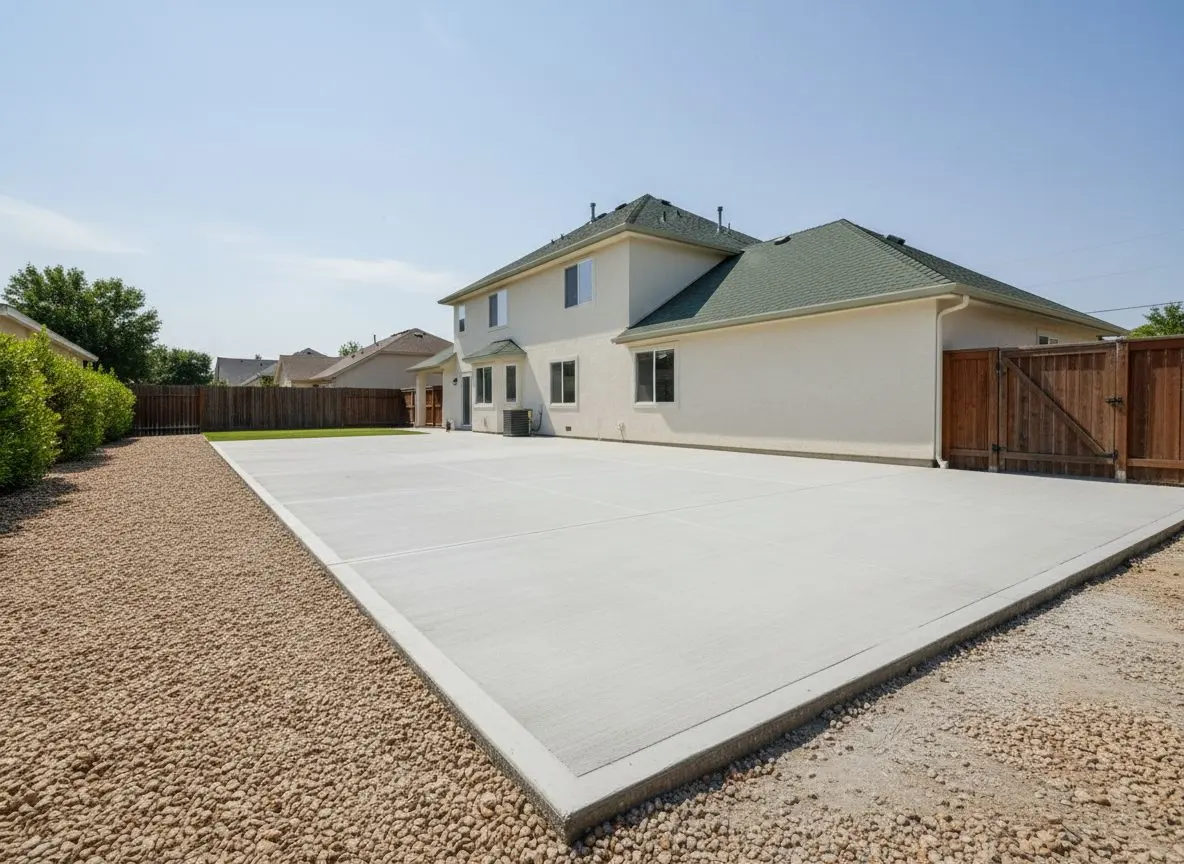
RV parking pad
Benton
A reinforced parking pad went in beside an existing driveway, poured thicker and with steel rebar to carry an RV's weight through the year.
-
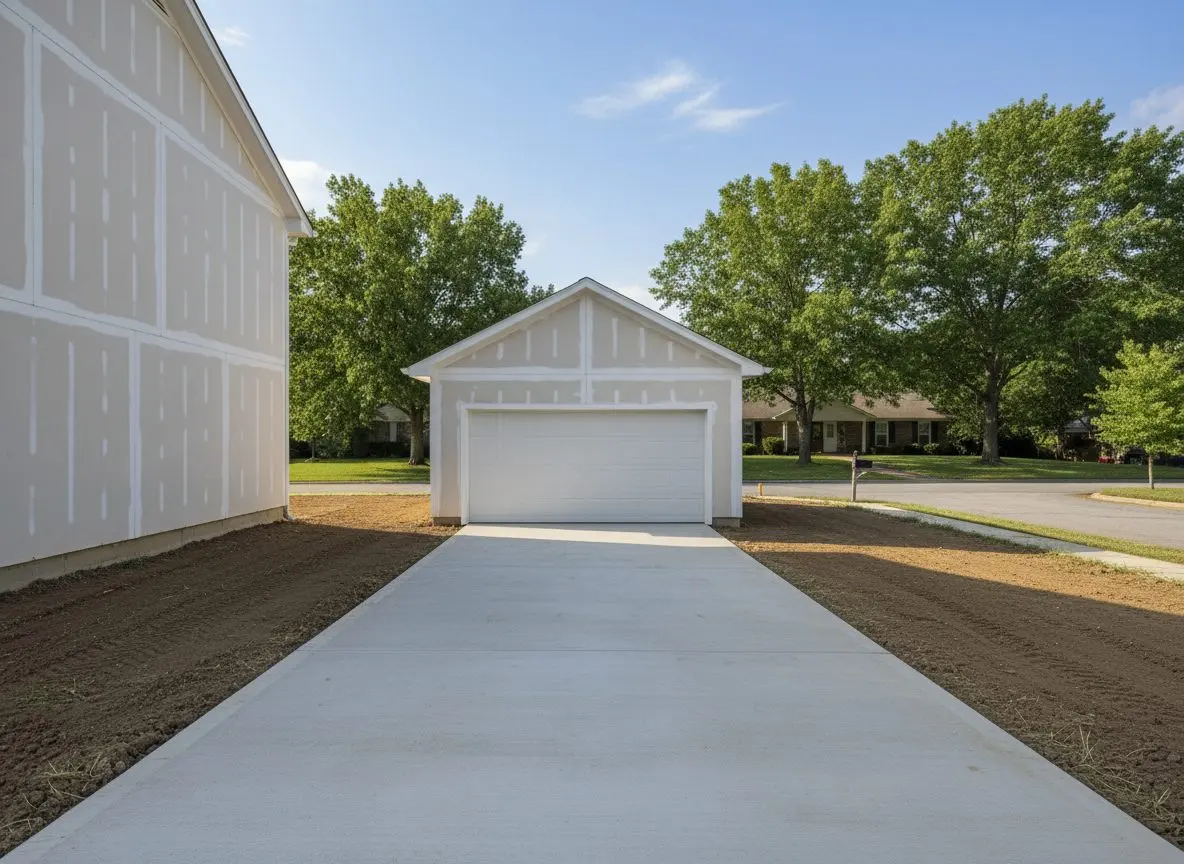
New driveway, garage addition
Bryant
A new driveway was poured alongside a garage addition, tied into the existing apron and graded to keep runoff away from both structures.
-
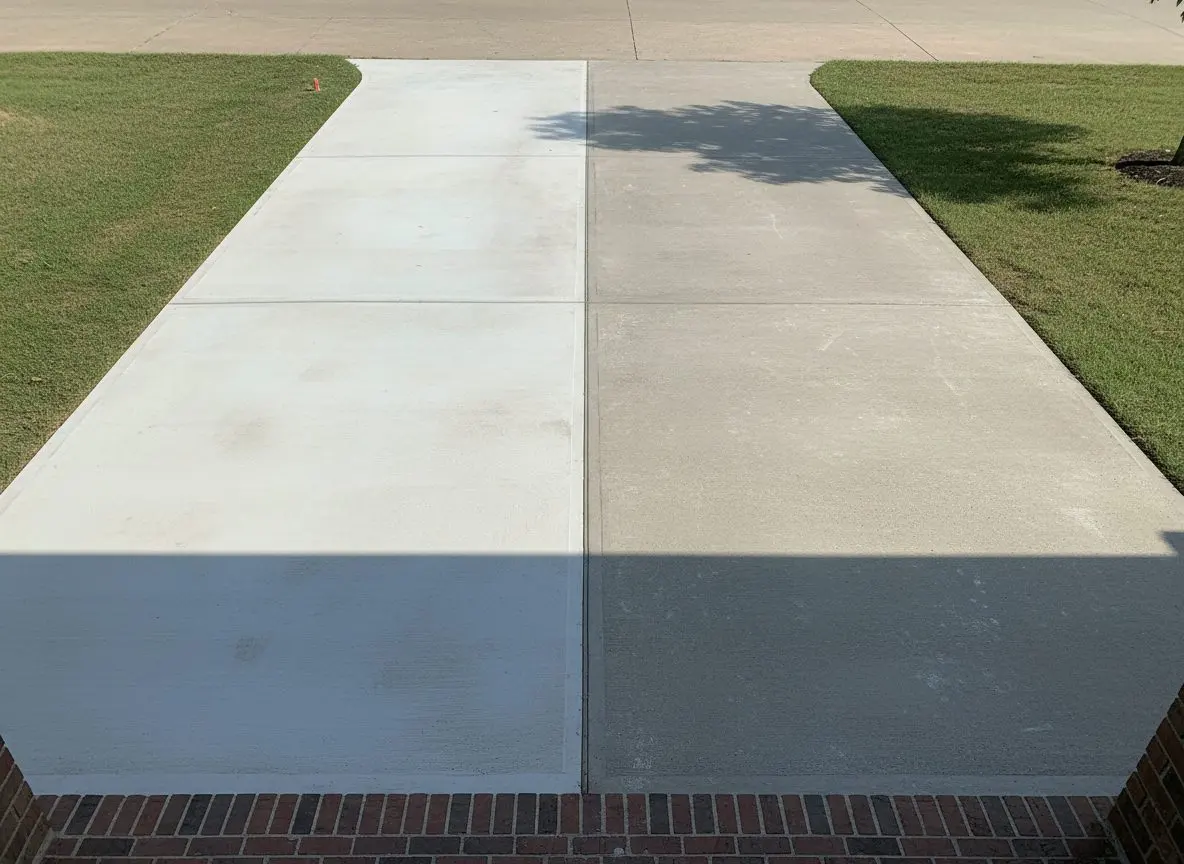
Extended two-car driveway
North Little Rock
A single-car driveway was widened to fit two vehicles, the new section reinforced and jointed separately from the original slab.
-
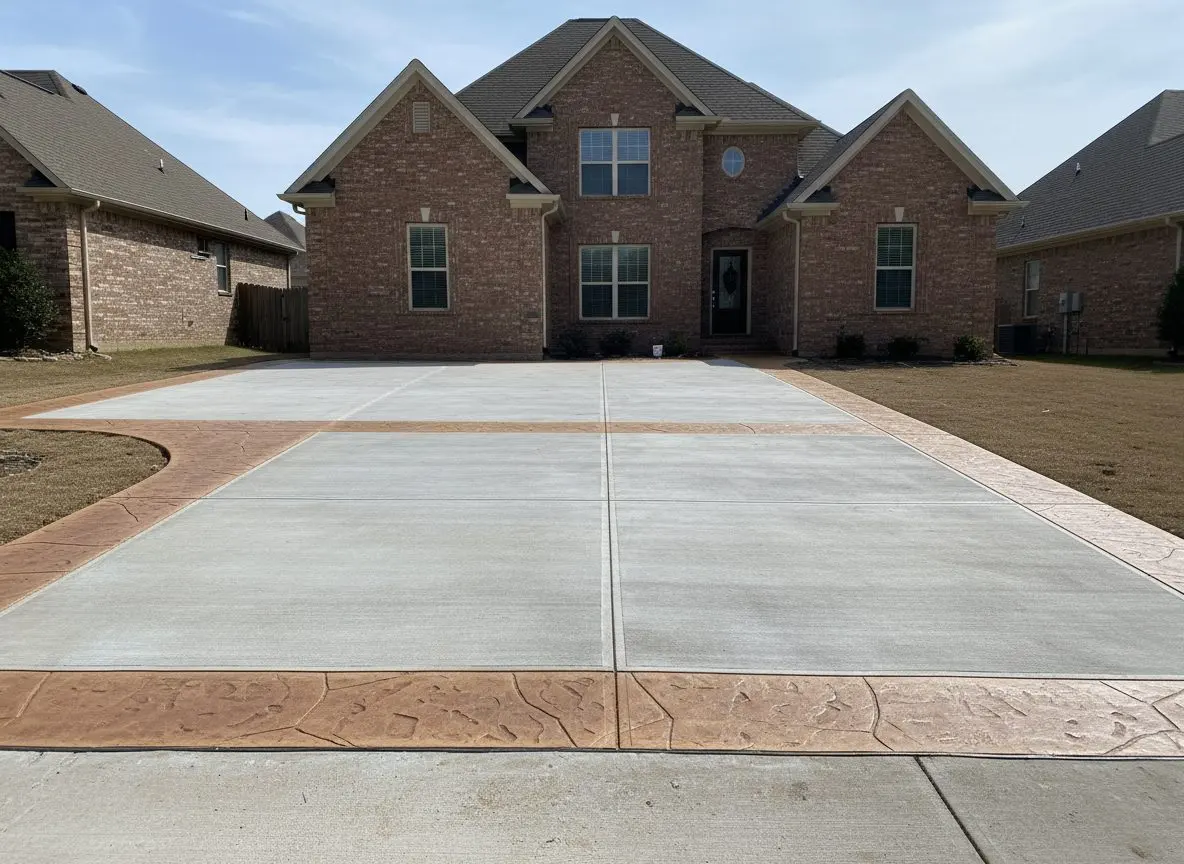
Stamped border driveway
Conway
A broom-finished driveway got a stamped, integrally colored border around its edge, matched to the brick on the house behind it.
What customers said after a new driveway
-
Rated 5 out of 5
Drive was breaking up at the apron where the delivery trucks turn in. They cut back to good concrete, redid the base and matched the finish. You cannot see the join from the street.
Doug W. Maumelle Driveway repair -
Rated 5 out of 5
They found a downspout running straight under the slab and stopped to sort the drainage before pouring anything. Added a day to the job. I would rather the day than the same crack back in two years.
Alicia R. North Little Rock Driveway replacement -
Rated 5 out of 5
Parking pad for a camper and a second car. I wanted it thicker than quoted so they repriced it in front of me instead of telling me it made no difference. Six months on and there is no dip in it.
Randy K. Cabot Parking pad
Tell us what the concrete is doing and someone will come out and look at it before you commit to anything.
Get a free quoteFAQs
Frequently asked questions
Driveway questions people ask before they call
Can you pour over an existing gravel driveway?
Yes, though the gravel and any soft ground under it usually comes out first rather than being poured over directly. A base that has been sitting under gravel for years still needs to be checked and compacted properly before a slab that has to carry a vehicle goes down on top of it.
Does a new driveway include the garage apron?
It can, and it is worth deciding before the quote is written rather than after. The apron takes the same wheel weight as the rest of the driveway and is usually poured in the same visit, so pricing it separately later only adds a second mobilization for the crew.
How long before I can park on a new driveway?
Most driveways take foot traffic within a day or two and the weight of a car after about a week, once the concrete has reached enough strength to carry it. A heavier vehicle, like an RV or a work truck, is usually held off closer to two weeks.
Should cracks be patched or is it time to repour?
A hairline crack sitting inside a control joint is normal and does not need a repour. A crack that runs across the slab away from a joint, or a section that has heaved or dropped on one side, usually means the base underneath has already failed and patching only hides it for a season.
Why does a circular driveway cost more than a straight one?
A circular or horseshoe drive needs curved formwork built by hand rather than straight boards, and it carries more edge for the same square footage than a plain rectangle does. Both add labor before a single yard of concrete is poured.
Can I still use my garage while it is being poured?
Not directly over the new concrete while it cures, no. Most jobs are timed so a car can be parked on the street or on a section of driveway left open, and the closed period is usually a matter of days rather than the whole job.
What PSI mix do you pour for a driveway?
A minimum of 4,000 PSI, which is the strength rated to carry a vehicle's weight without the surface breaking down under repeated loading over time. A patio or a footpath that only ever carries foot traffic can run a lighter mix and still hold up fine.
Do you need to bring a truck onto my property?
A ready-mix truck backs up to the site wherever it can reach, which is the fastest and least expensive way to place concrete. Where a gate, a slope or a tight side yard blocks that, the concrete gets pumped or wheeled in by hand instead, which adds time to the job.
Can an existing driveway be widened to fit two cars?
Yes, and the new section is tied into the old slab with reinforcement bar drilled and set into the existing edge, so the two do not move independently of each other. The new concrete is jointed separately from the old, since the two pours will not cure and age at exactly the same rate.
Rebar, fiber, or both in a driveway?
Fiber reinforcement, mixed through the concrete itself, is standard for a car and a light truck. Steel rebar, laid before the pour, is added where a boat, an RV or a heavier work truck sits on the slab regularly, since it carries more load across a crack than fiber alone.
What happens if a new driveway cracks anyway?
A hairline crack along a control joint is the concrete doing exactly what it was designed to do. Anything else, a crack away from a joint or a section that has moved, is covered by the workmanship and gets looked at rather than left to spread.
Does a new driveway need to be sealed?
A plain broom-finished driveway does not strictly need it, though a sealant applied once the concrete has cured helps keep water out of the surface. A stamped or exposed aggregate driveway benefits more, since sealing is what keeps the texture and color from wearing under an Arkansas summer.
Little Rock Concrete Elite
Pouring concrete across central Arkansas since 2011.
Little Rock Concrete Elite pours driveways, patios, foundations, garage slabs and steps across Little Rock and the surrounding towns of central Arkansas, along with repair, resurfacing and decorative finishes like stamped and stained concrete for slabs already showing their age.
Why call Little Rock Concrete Elite for the pour?
- Pouring driveways, patios, foundations and repairs since 2011
- A written quote naming the mix, thickness and joints, not a guess
- Same day callback on every call
- General liability and workers compensation cover on every job
- Crews who build for Arkansas clay and heat, not against them
Central Arkansas's clay soil moves every slab poured on it, and the difference between a driveway that lasts and one that cracks at the joints within a year is what goes in before the truck ever arrives. Little Rock Concrete Elite has been getting that part right in Little Rock since 2011. Call (501) 555-0168 for a free estimate, or ask for a same day callback.
Give us a call
office@littlerockconcreteelite.com
Send us a message
400 W Capitol Ave, Ste 1700, Little Rock, AR, 72201
Where to find us